

The very mention of The Boeing St. Louis Strike conjures images of soaring innovation, massive assembly lines, and the indelible mark of American engineering on the global stage. Yet, behind the gleaming fuselages and the complex avionics lies a story that is deeply human, fraught with tension, negotiation, and the fundamental struggle between capital and labor. The Boeing St. Louis strike is not merely a footnote in the company’s history; it is a microcosm of the broader shifts occurring within the American manufacturing landscape. It represents a clash of eras, where the old guard of unionized labor fights to maintain its footing in an industry increasingly driven by shareholder value and global competition. To understand this specific labor action is to understand the soul of modern aerospace manufacturing.
When we talk about the Boeing St. Louis strike, we are talking about a specific workforce with a unique heritage. This isn’t just any assembly plant; this is the home of the F-15 and the F/A-18, the fighter jets that have patrolled the skies for decades. The workers here are not just employees; they are craftspeople who have inherited a tradition of building warplanes that define American air superiority. The strike, therefore, carries a weight that goes beyond mere wages and benefits. It touches on national security, regional economic stability, and the pride of a community that has literally built the tools of defense for the nation. This history makes the disputes here more passionate and the stakes significantly higher than in typical manufacturing disputes.
The intricacies of the labor dispute at the St. Louis facilities often serve as a bellwether for the entire aerospace sector. When Boeing workers in Missouri walk off the job, the reverberations are felt from the Pentagon to the stock market. It forces a national conversation about the value of skilled labor in an age of automation and outsourcing. The arguments made on the picket lines in St. Louis are echoed in union halls across the country, making this local action a national referendum on worker rights and corporate responsibility. The strike is a high-stakes poker game, with the future of the workforce and the company’s reputation hanging in the balance.
The Historical Tapestry of Labor in St. Louis
To truly grasp the gravity of the current labor situation, one must look back at the long and storied history of unionization in St. Louis, particularly in the defense sector. This is a region that has been forged by the industrial revolution and solidified by the wars of the twentieth century. The workforce here has been unionized for generations, with fathers passing down memberships to their sons and daughters. The culture of collective bargaining is deeply ingrained in the local psyche, creating a sense of solidarity that is difficult to break. This historical context explains why the workers are so willing to endure the financial hardship of a strike; they see themselves as guardians of a legacy that predates the current corporate leadership.
The Boeing St. Louis Strike acquisition of McDonnell Douglas in the late 1990s was a pivotal moment that altered the labor dynamics in St. Louis. Prior to the merger, McDonnell Douglas had a distinct corporate culture and a specific relationship with its unions. The integration into Boeing introduced a new level of corporate bureaucracy and a shift in focus toward commercial profitability. Older workers often speak of a time when the company felt more like a family than a corporation. The strike, in many ways, is an effort to reclaim that lost relationship. It is a fight against the erosion of the “old-school” benefits and job security that the legacy of McDonnell Douglas had promised.
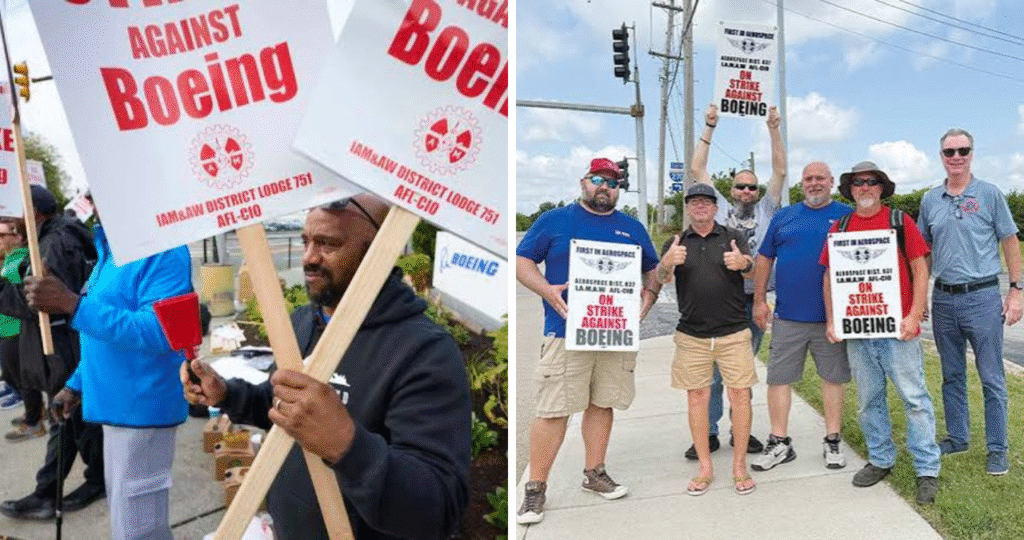
The labor unrest in St. Louis also fits into a broader pattern of industrial decline and resurgence in the Midwest. The region has seen its manufacturing base shrink over the decades, making the Boeing plant a vital economic pillar for the community. When workers strike, it isn’t just their own income that is affected; it is the local diners, the car dealerships, and the school districts that rely on the tax base provided by these high-paying jobs. This interwoven relationship means that the community does not view the strike in a vacuum. They see it as an existential threat to their way of life, which adds a layer of emotional urgency to the negotiation table.
The Specific Grievances of the Modern Worker
While the history provides the backdrop, the specific grievances driving the modern strike are rooted in the contemporary economic climate. The primary bones of contention usually revolve around wage stagnation, the rising cost of healthcare, and the erosion of pension plans. Workers at the Boeing St. Louis facility often argue that while the company is posting record profits and awarding its executives massive bonuses, the rank-and-file employees are being asked to accept lower real wages. The disparity between executive compensation and worker pay has become a central rallying cry on the picket lines, symbolizing a broader economic inequality that resonates far beyond the factory floor.
Health insurance remains a “third rail” in these negotiations. The cost of medical care in the United States has skyrocketed, and workers are increasingly being asked to shoulder a larger portion of the premiums. For a workforce that often deals with physically demanding tasks and potential exposure to hazardous materials, robust health coverage is not just a perk; it is a necessity. The union negotiators are fighting to ensure that the insurance packages do not degrade to a point where a medical emergency becomes a financial catastrophe. This is a deeply personal issue for the workers, as it directly impacts their families’ well-being and their ability to retire with dignity.
The shift toward a two-tiered wage system has also been a significant flashpoint. This system, which offers lower starting wages and reduced benefits for new hires, creates a division within the workforce. The “legacy” workers often fear that the company is attempting to gradually phase out the generous packages they fought for decades ago. They feel a moral obligation to protect not only their own benefits but also the future earnings of the younger generation coming in. The strike, therefore, is as much about intergenerational solidarity as it is about immediate monetary gain. It is a stand against the “race to the bottom” that often characterizes globalized manufacturing.
The Role of the Union Leadership
The union leadership at the International Association of Machinists and Aerospace Workers (IAM) holds a tremendously challenging position in these situations. They must act as the voice of the members while navigating the legal and financial minefields of a major labor dispute. The leadership has to balance the militant demands of the most passionate workers with the pragmatic realities of the negotiation room. They are acutely aware that a strike can be a double-edged sword; while it exerts pressure on Boeing, it also exhausts the union’s strike fund and pushes members to the brink of financial ruin.
The relationship between the local union leaders and the national IAM leadership is also crucial. While the local representatives understand the specific nuances of the St. Louis plant, the national leadership brings a broader perspective on the aerospace industry. They often have to consider how a victory in St. Louis might affect union negotiations at other Boeing facilities in Washington or South Carolina. This interplay of local demands and national strategy makes the leadership’s job a high-wire act, requiring diplomacy and a firm resolve. They must ensure that the membership remains united and focused on the end goal, even as the weeks on the picket line stretch on.
Furthermore, the union leaders must be adept at navigating the court of public opinion. They must communicate their grievances clearly to the media and the public, framing the strike not as a selfish act, but as a fight for economic justice. In the aerospace industry, where national defense is involved, the union often has to argue that the workers’ demands are essential for retaining the high-quality workforce necessary for building top-tier fighter jets. They sell the narrative that a well-compensated worker is a reliable worker, and that reliability is the foundation of the nation’s defense.
Boeing’s Corporate Perspective and Strategy
From the corporate boardroom, the strike represents a significant operational and financial disruption. Boeing has to balance the cost of meeting union demands against the losses incurred by a halted production line. The company’s leadership has a fiduciary duty to its shareholders to minimize costs, which puts them in direct opposition to the union’s desire for increased compensation. The corporate strategy often involves making aggressive initial offers that are designed to test the union’s resolve, followed by a slow, calculated move toward the middle ground as the strike drags on.
Boeing also has to consider the broader implications of the strike on its reputation with the Department of Defense. Since the St. Louis facility primarily produces military aircraft, delays in delivery can strain relationships with the Pentagon. However, defense contracts are often less price-sensitive than commercial ones, and delays are sometimes accepted as a cost of doing business. Nonetheless, Boeing must be careful not to appear as if they are jeopardizing national security due to a labor dispute, as this could lead to negative press and potential political interference.
The company’s strategy also involves leveraging its “other” facilities. During the strike, Boeing often attempts to shift some workload to its non-union facilities in the South or to its global supply chain to mitigate the impact. This creates a sense of urgency among the St. Louis workers, who fear that their work is being permanently outsourced. However, the highly specialized nature of fighter jet manufacturing often makes this difficult, as the skills and tooling required for these specific aircraft cannot be easily replicated elsewhere. This reliance on the specific skillset of the St. Louis workforce gives the union a unique leverage point.
The Psychological Toll on the Workforce
When a strike hits, the psychological impact on the workforce is often as significant as the financial impact. The initial days of a strike are often characterized by a sense of solidarity and righteous anger. Workers feel empowered, standing together on the picket lines, chanting slogans and enjoying the camaraderie of a shared struggle. However, as the days turn into weeks, the emotional toll begins to mount. The uncertainty of when the next paycheck will arrive creates severe anxiety, and the stress of living on strike pay can wear down even the most determined workers.
The psychological warfare extends to the negotiating table as well. The company often allows contract offers to expire, forcing the union to re-vote and creating a “will they or won’t they” tension within the ranks. This is a deliberate tactic to fracture the solidarity of the union, hoping that the fear of losing the offer will cause some members to vote yes against the leadership’s recommendations. The union leaders must work overtime to keep the morale high, organizing group activities, music, and food on the picket lines to maintain the “spirit of the fight.” It is a battle of attrition, and the side that can best withstand the mental fatigue often wins.
Furthermore, the social dynamics within the workforce can become strained. Some workers may be more financially vulnerable than others, leading to internal conflict about whether to hold out for a better deal or accept a contract that is considered subpar by the union leadership. This internal tension is the single greatest threat to a strike’s success. The ability of the union to keep its members unified and focused on the collective goal is the most critical factor in achieving a favorable outcome. It requires constant communication, transparency, and a deep sense of mutual trust among the workers.
The Economic Impact on the Local Community
The economic landscape of St. Louis is intrinsically linked to the fortunes of the Boeing plant. The facility employs thousands of highly paid workers, whose spending power ripples through the local economy. When a strike occurs, that economic engine sputters to a halt. Local restaurants, bars, and retail stores see a sudden drop in revenue as workers tighten their belts. Property values in neighborhoods near the plant can be affected, as the uncertainty surrounding the job market makes buyers cautious. The strike is a stark reminder of the region’s reliance on a single industry, a condition that policymakers often lament but rarely manage to change.
The impact extends beyond the service industry. Local schools that rely on property taxes to fund their operations may face budget shortfalls as the tax base shrinks. Furthermore, the vendors and suppliers who rely on the Boeing plant for their own business operations are also hit hard. Small machine shops, logistics companies, and catering services that serve the plant are forced to lay off their own employees or reduce hours. The economic devastation of a strike is not confined to the factory walls; it radiates outward, affecting thousands of people who have no direct affiliation with the union.
This economic pressure is a double-edged sword for the union. While it is intended to pressure Boeing into settling, it also generates sympathy fatigue within the community. People who are losing their own livelihoods due to the slowdown may begin to resent the strikers, especially if they perceive the demands as excessive. The union must carefully manage its public relations to ensure that the community views the strike as a legitimate grievance rather than an act of greed. Ultimately, the local economy suffers in the short term, but the union argues that a fair contract is essential for the long-term economic health of the region.
The Role of the Federal Government and Defense
Given that the Boeing St. Louis plant produces military hardware, the federal government is never far from the conversation. The Department of Defense has a vested interest in ensuring that the production of the F-15 and F/A-18 remains uninterrupted. However, the government is typically reluctant to intervene directly in a private labor dispute. Their involvement is usually limited to urging both sides to return to the negotiating table. In extreme cases, there have been historical precedents for the government to invoke the Taft-Hartley Act to force striking defense workers back to work, but this is a nuclear option that is rarely used.
The political reality is that labor unions maintain significant influence in Washington, D.C., particularly with members of Congress who represent manufacturing districts. Politicians from Missouri and neighboring states often walk a tightrope, publicly calling for a fair resolution without alienating either the union members or the major corporation that provides jobs in their district. They are under pressure to protect both the jobs and the profits, which often leads to rather innocuous statements that don’t satisfy anyone fully.
Furthermore, the defense spending cycle influences the dynamics of the strike. When the government is in a period of increased defense spending, Boeing is more likely to be conciliatory, as the future order book looks robust. Conversely, if there is a push to reduce defense spending, Boeing may be more aggressive in trying to cut labor costs to remain competitive for future contracts. The strike, therefore, is sometimes seen as a gamble on the future of defense procurement. The workers are betting that their skills are too valuable to lose, while the company is betting that the government will tolerate a delay in production.
A Comparative Analysis of Boeing Strikes
The St. Louis strike is not an isolated phenomenon; it belongs to a lineage of labor actions that have punctuated Boeing’s history. Comparing the St. Louis situation to the massive 2008 strike that shut down Boeing’s commercial operations is instructive. The 2008 strike was primarily about job security and the use of outsourced labor. While the St. Louis strike also touches on those issues, it also carries the unique weight of defense manufacturing. The differences in the product lines—commercial jets vs. military fighters—dictate the tone and the urgency of the negotiations.
Looking at the 2008 strike in the Pacific Northwest, we see that the union was able to secure significant gains, although it took nearly two months of lost production. The workers there were able to leverage Boeing’s backlog of commercial orders to force a settlement. In St. Louis, the order backlog for military jets is often different; the government doesn’t place orders in the same “bulk” way that airlines do. This means that the financial pressure on Boeing from a military shutdown can be harder for the company to quantify, making the timing of the settlement less predictable.
Another key difference lies in the geographic and political dynamics. The Pacific Northwest is strongly union-friendly, whereas Missouri has become increasingly “right-to-work” in recent years. This shift in the political landscape of the state may make Boeing more aggressive in its stance, believing that the political winds are blowing in their favor. However, the specialized skills of the St. Louis workforce act as a counterbalance to this political disadvantage. The union has to fight harder to protect what it has, making the strikes more intense and often more personal.
The Future of Labor in the Aerospace Industry
The outcome of the Boeing St. Louis strike will have profound implications for the future of labor relations in the aerospace industry. If the union succeeds in holding the line on wages and benefits, it will send a strong signal to other unions across the country that it is possible to push back against corporate pressure. It would reinforce the idea that collective action remains the most effective tool for workers to secure their share of the profits. Conversely, if the union is forced to accept a contract that is seen as a “concessionary” deal, it could embolden other aerospace manufacturers to demand similar rollbacks.
The aerospace industry is facing a “skills gap” that is likely to become a crisis in the coming years. The current workforce is aging, and there are not enough young people entering the trades to replace them. This shortage of skilled labor gives the workers a surprising amount of leverage. They can argue that the company cannot afford to alienate its current workforce because there is no one to replace them. This dynamic makes the strike not just a labor dispute, but a strategic debate about the future of manufacturing in the United States.
Finally, the rise of automation and advanced manufacturing technologies will likely change the landscape. If Boeing begins to implement more automation in the St. Louis facility, the number of union jobs will inevitably decrease. The next round of contracts will have to address how to protect workers in an increasingly automated environment. The strike serves as a bargaining chip for the workers to secure a “just transition,” ensuring that as the factory modernizes, the human workers are not left behind. The strike is a prelude to the larger conversation about the role of humans in the future of aerospace manufacturing.
The Negotiation Tactics and Poker Faces
The negotiation table is a theater of war where poker faces and red lines are the currency of the day. Both Boeing and the union leaders walk into the room with carefully crafted strategies. Boeing often starts with a lowball offer, anticipating that the union will reject it and that they will be forced to “climb” the ladder of concessions. This is a classic anchoring strategy designed to set the terms of the debate at a point favorable to the company. The union, in turn, counters with a high demand, knowing that they will have to retreat to a more moderate position as the negotiations progress.
The use of “last, best, and final” offers is a high-risk tactic often used by Boeing. When they present a final offer to the union, they are signaling that they are unwilling to negotiate further. This puts the union leaders in a difficult position. If they present the offer to the membership and it is rejected, the strike continues, but if they reject it out of hand without a vote, they risk appearing unreasonable. The union must carefully read the “temperature” of the membership to decide whether to take the offer to a vote or hold out for more.
Inside the negotiating room, the chief negotiators are reading each other’s body language and tone. It is a psychological game as much as a numbers game. A slight pause in a response, a nervous cough, or a brief glance at a colleague can be interpreted as a sign of weakness. The union side has to convince Boeing that they are willing to “burn the house down” rather than accept a bad deal. This requires a credible threat of prolonged strike action. The corporate side has to convince the union that they are serious about cutting costs and will not be moved by emotional appeals. Ultimately, the effectiveness of these tactics determines the speed and outcome of the resolution.
The Impact of Social Media on the St. Louis Strike
In the modern era, social media has become a powerful weapon in the arsenal of organized labor. The Boeing St. Louis strike is no exception. Workers and union leaders use platforms like Twitter, Facebook, and Instagram to broadcast their grievances to a global audience. They post videos of the picket lines, share stories of workers struggling to pay their bills, and tag local politicians. This digital strategy is designed to create public pressure on Boeing and highlight the human cost of the dispute.
Social media also plays a crucial role in maintaining solidarity. During a strike, workers are physically spread across different picket locations, and it can be difficult to maintain a unified message. Platforms like Facebook allow for the creation of private groups where workers can share information, organize events, and discuss strategy. It helps to keep everyone on the same page and prevents the spread of misinformation or demoralization. Furthermore, the ability to instantly share photos of large picket lines serves as a visual testament to the strength of the union.
However, social media is a double-edged sword. It also opens up the union to criticism and counter-propaganda. Boeing’s public relations team is also active on these platforms, attempting to frame the strike as an unreasonable act of greed. The “comment sections” of news articles and social media posts often become battlegrounds where anonymous users debate the merits of the strike, sometimes leading to heated arguments. The union must actively manage its digital presence to ensure that its message cuts through the noise and effectively communicates the workers’ demands to the public.
The Significance of the F-15 and F/A-18 Programs
The specific aircraft built in St. Louis play a massive role in the narrative of the strike. The F-15 and F/A-18 are not just planes; they are symbols of American military might. These are the workhorses of the United States Air Force and Navy, and they are also heavily exported to allied nations. The workers take immense pride in knowing that the “fighter jet that the world fears” was built by their hands. This sense of pride often makes them more resilient during a strike; they feel that they are fighting for the respect that their craftsmen status deserves.
The production cycles of these programs also influence the timing of the strike. Boeing often has multi-year contracts with the Department of Defense for these aircraft. A strike can disrupt the delivery schedule, which is particularly damaging if the Pentagon has already allocated funding for a specific timeline. However, because these are legacy programs, there is often a significant “order backlog” that provides some buffer. The union is aware that the Pentagon cannot easily source these fighter jets from a competitor, giving them significant leverage.
Furthermore, the global export market for these jets adds a layer of complexity. Countries like Japan, Korea, and Australia operate these aircraft and rely on Boeing for upgrades and parts. A strike in St. Louis can have a ripple effect across the globe, potentially straining diplomatic relations if deliveries to allies are delayed. This global reach makes the strike not just a domestic issue, but an international one. The union often reminds the public of this global significance to emphasize that the workers hold a critical responsibility for global security.
The Fight for Healthcare and Retirement Benefits
Perhaps no other issue resonates as strongly with older workers as the fight for healthcare and retirement benefits. These are the promises that convinced many workers to dedicate their lives to the company. Over the years, the union has fought tirelessly to preserve the defined-benefit pension plan, which guarantees a specific amount of income upon retirement. However, in the modern corporate world, such pensions are becoming increasingly rare, and Boeing has attempted to freeze or replace them with less secure 401(k) plans.
The healthcare debate is equally contentious. The union is often asked to accept higher deductibles and co-pays as healthcare inflation continues to outpace general inflation. This is a significant burden on workers who may have underlying health conditions or who are supporting large families. The negotiation over healthcare is particularly grueling because it is a literal life-and-death issue for many members. The union must strike a balance between protecting the quality of care and keeping the cost of the contract manageable for the company.
The younger members of the workforce are often more concerned with the present value of their wages, but the older members are the “soul” of the union who remember when pensions were the bedrock of the middle class. This generational divide can create tension, but it also unites them under a common goal. The younger workers recognize that fighting for the pensions of the older workers today is fighting for their own right to retire in the future. It is a fight against the “gig economy” mentality that has eroded the promise of a secure retirement for so many Americans.
The Environment and Safety Concerns
While financial issues dominate the headlines, safety in the workplace is another critical factor in the Boeing St. Louis strike. The plant is not just an assembly line; it is a facility where highly toxic chemicals, heavy metals, and composites are used daily. The workers are often exposed to silica, beryllium, and other hazardous materials that can cause long-term health issues. The union argues that the company has a moral and legal obligation to provide a safe working environment and that this obligation cannot be sacrificed in the name of efficiency or cost-cutting.
The union often uses the strike to bring attention to outdated safety protocols or understaffed safety teams. They argue that when the company pressures workers to meet strict production deadlines, safety takes a backseat. This creates a “culture of acceptance” where minor safety violations are overlooked until they result in a catastrophic accident. The strike is a chance to demand a seat at the table for safety issues, ensuring that the union’s health and safety committee has genuine authority to halt operations when necessary.
Furthermore, environmental concerns about the chemicals used in the plant often bubble up to the surface during contract negotiations. The workers live in the same community as the plant, and they are deeply concerned about pollution and its impact on their families. They are demanding not just better personal protective equipment, but also better environmental controls for the facility as a whole. The strike becomes a vehicle to push for a cleaner, more sustainable operation that protects both the workers and the surrounding environment.
The Intersection of Politics and the Picket Line
The picket line in St. Louis is rarely far from the political theater of Washington D.C. The labor movement has long been a bastion of the Democratic Party, but the landscape has shifted significantly. In recent years, some union members have drifted toward the Republican Party, particularly on social issues, creating a complex political dynamic. The union leadership must navigate these partisan divides to keep the membership focused on their common economic interests rather than their political differences.
Local politicians are often seen walking the picket lines during the strike, showing solidarity with the workers. This is a highly visible act that signals to the electorate that the politician is on the side of the “working man.” However, these same politicians may be getting donations from Boeing’s political action committees behind the scenes. This creates a conflict of interest that is often scrutinized by the media. The union is aware of this and uses the strike to push for legislative reforms, such as stricter labor laws or increased penalties for unfair labor practices.
The strike also becomes a factor in state-level politics. Missouri has seen heated debates over right-to-work legislation. A prolonged strike could be used by anti-union forces as evidence that unions are disruptive, while pro-union forces will argue it is a necessity. The outcome of the strike in St. Louis could influence the political trajectory of labor rights in the state, making it a significant event far beyond the factory gates.
Media Coverage and Public Perception
How the media covers the Boeing St. Louis strike is crucial to its eventual outcome. If the media focuses on the human-interest stories of struggling families and the pride of the workers, public sympathy often leans toward the union. However, if the media focuses on the economic damage, the disruption of military supply chains, or the “greedy” nature of the union demands, public opinion can turn against the strikers. The union employs public relations experts to manage the narrative, ensuring that their side of the story is told effectively.
The local media, in particular, has a vested interest in the strike because it affects their viewers and readers directly. They tend to cover the strike with a “boots on the ground” approach, interviewing workers on the picket line and business owners who are suffering from the loss of economic activity. This localized coverage often creates an emotional connection for the viewer, making the conflict feel personal rather than abstract. National media tends to cover the strike as a “business story,” focusing on the stock price and the potential impact on Boeing’s defense contracts.
Furthermore, the media plays a role in fact-checking the claims of both sides. If Boeing claims that its offer is “generous,” the media will analyze the numbers and compare them to inflation and industry standards. If the union claims that workers are being forced to live in poverty, the media will investigate the average salary of a machinist in the area. This critical analysis helps the public understand the truth of the situation, which ultimately influences the political pressure on both sides to settle the dispute.
The Path to Resolution and Lessons Learned
The resolution of the Boeing St. Louis strike typically involves a series of compromises. No side ever gets everything they want. The union might get a significant wage increase but agree to a minor increase in healthcare costs. Boeing might maintain its control over scheduling but concede on the pension issue. The “art of the deal” is about finding a middle ground where both parties can claim a victory. This usually happens when the cost of the strike to Boeing outweighs the cost of the concessions, and the financial pain on the workers becomes too severe.
The lessons learned from a strike are often painful but invaluable. Both sides analyze their performance to prepare for the next negotiation cycle. The union learns which issues resonate most with the workers and which tactics the company is most vulnerable to. Boeing learns which concessions are inevitable and which lines they can hold firm on. This continuous learning shapes the relationship between labor and management, often leading to a more stable but sometimes more adversarial partnership.
Ultimately, the Boeing St. Louis strike is a testament to the enduring power of collective action. Despite the advanced technology of the aircraft they build, the workers understand that their strength lies in their unity. They prove that even in a high-tech industry dominated by corporate giants, the human element remains irreplaceable. The strike reinforces the idea that the middle class was built not by corporate charity, but by organized workers willing to sacrifice everything for a fair share of the wealth they helped create.
Thomas Boone Quaid: The Remarkable Life of Dennis Quaid’s Son