
When it comes to SEO tools, the conversation almost always circles back to the same three heavyweights. Semrush, Ahrefs, and Moz are the undisputed champions of the industry, each commanding a massive following and offering a suite of features that promise to elevate your digital marketing game. But here’s the thing that keeps marketers up at night: which one is actually the best for your specific needs? It is a question that has sparked countless debates in boardrooms, Slack channels, and Twitter threads, and it is one that does not have a one-size-fits-all answer.
Let’s be real for a moment. Choosing the right SEO tool is a decision that can make or break your strategy. It is not just about picking a name you have heard before; it is about investing in a platform that will serve as the backbone of your organic growth efforts. In this deep dive, we are going to tear down the hype, look under the hood, and give you the unvarnished truth about these three titans. By the time we are done, you will have a crystal-clear understanding of where each tool shines and, more importantly, where they fall short.
The Evolution of SEO Tool Giants
The landscape of Semrush engine optimization has changed dramatically over the past decade, and these three tools have evolved right alongside it. They did not just become popular overnight; they earned their reputations through years of iteration, user feedback, and a relentless focus on solving the complex problems that SEO professionals face daily. Each tool has a unique origin story that informs its current philosophy and feature set.
Semrush started its journey as a competitive intelligence tool, which explains why it is so incredibly good at giving you a window into your competitors’ strategies. It was built from the ground up to help you spy on what is working for others and replicate that success. Ahrefs, on the other hand, began as a backlink analysis tool, and its roots in link data are still very much evident today. Its index is notoriously massive and fresh, making it the go-to choice for anyone serious about link building. Moz, the granddaddy of the group, has always been about making SEO accessible. It pioneered concepts like Domain Authority and Page Authority, which have become industry standards. Its focus has consistently been on education and user-friendliness.
Understanding these origins helps you see why they excel in different areas. Semrush is your all-in-one marketing suite, Ahrefs is your data powerhouse for backlinks and content, and Moz is your trusted guide for actionable insights and community-driven knowledge. They have all branched out from their core competencies, but their DNA remains distinct. This is not a battle of good versus bad; it is a matter of finding the right fit for your workflow.
Deciphering the User Interface and Overall Experience
Diving into a new Semrush can often feel like learning a new language, but the experience varies significantly between these three platforms. First impressions matter, and the user interface is your gateway to the data that drives your decisions. Let’s break down what it is like to actually use each of these tools daily. You want a tool that feels intuitive, where you can find what you are looking for without having to click through ten different menus.
Semrush greets you with a dashboard that is packed with information. It can feel a bit overwhelming at first because there is just so much on the screen. However, once you get past the initial shock, you realize that the layout is actually quite logical. Everything is accessible from the left-hand sidebar, with clear icons and labels. The project management feature is a standout, allowing you to set up specific campaigns for different websites and track their performance over time. It feels like a command center, and while it has a steep learning curve, the payoff is massive for those who invest the time to master it.
Ahrefs takes a more minimalist approach to its interface. It is clean, white, and surprisingly simple to navigate. The top navigation bar gives you access to all the main tools, and the sidebar within each tool provides additional filtering options. This simplicity is deceptive because the data you can pull is incredibly deep. The learning curve is gentler than Semrush, but the tool still requires a certain level of SEO knowledge to truly appreciate what you are looking at. You can jump in, run a site audit, and understand the basics quickly, but unlocking the advanced capabilities requires some digging.
Semrush, true to its mission of making SEO accessible, has the most beginner-friendly interface of the three. It is visually appealing and uses a lot of color coding to help you quickly understand your site’s health. The dashboard is straightforward, and the tools are clearly labeled. The Keyword Explorer and Link Explorer are particularly easy to use, providing clear metrics and suggestions without overwhelming the user. While some hardcore SEOs might find it too simplistic, its approachability is a massive advantage for small business owners or marketing teams that are just getting started with SEO.
Unpacking the Keyword Research Capabilities
Keyword research is the foundation of any Semrush SEO strategy, and these three tools offer robust solutions to help you find the terms your audience is searching for. The approach each takes, however, is slightly different, and the quality and breadth of the data can vary. You need a tool that not only provides a list of keywords but also offers insightful metrics like search volume, difficulty, and related questions.
Semrush is often considered the king of keyword research, and for good reason. Its Keyword Magic Tool is a beast, generating hundreds of thousands of keyword suggestions from a single seed term. The tool is incredibly flexible, allowing you to filter by questions, related terms, or broad matches. The addition of the “Intent” filter is a game-changer, helping you understand whether a user is looking for information, a specific brand, or is ready to make a purchase. This level of granularity is invaluable for creating content that actually converts.
Ahrefs takes a slightly different approach with its Semrush Keywords Explorer, which is arguably one of the most powerful tools of its kind. It boasts one of the largest keyword databases in the industry, and its metrics like Keyword Difficulty and Clicks data provide a realistic picture of the traffic potential for a given term. One of its standout features is the ability to see the top-ranking pages for any keyword and analyze their backlink profiles right there. This integration of keyword and backlink data is incredibly efficient and saves you a ton of time jumping between different tools.
Moz offers a solid keyword research tool through its Semrush Keyword Explorer. It provides clear data on monthly search volume, organic click-through rates, and keyword difficulty. The “Potential” metric is a nice touch, indicating the likelihood of a keyword driving organic traffic. Moz excels in presenting this data in a clear, digestible format that is perfect for creating reports for clients or stakeholders who might not be deep into the technical side of SEO. While it may not have the sheer volume of data that Semrush or Ahrefs provides, its accuracy and user-friendly design make it a reliable choice.
The Battle of Site Audits and Technical SEO
Technical SEO is the bedrock of your website’s health, and a good site audit tool can save you from countless headaches. These audits can uncover issues like broken links, duplicate content, slow-loading pages, and poor mobile responsiveness. Each of these tools offers a comprehensive site audit feature, but they differ in how they crawl your site, the issues they prioritize, and how they present the data.
Semrush’s Site Audit tool is incredibly thorough. It mimics a search engine crawler, traversing your entire website and flagging over one hundred different types of issues. What sets it apart is the way it prioritizes these issues, categorizing them by severity. This helps you focus on the critical errors that are impacting your rankings first. The tool also provides detailed instructions on how to fix each issue, which is a huge help for beginners. The thematic reports are brilliant, grouping issues by topic like HTTPS, internal linking, or image optimization, making it easier to tackle specific areas of improvement in one go.
Semrush’ Site Audit tool is equally powerful and is known for its speed and accuracy. It is particularly good at identifying technical issues that could be hurting your organic traffic. The dashboard is clean and shows the overall health score, broken down by different issue types. One of the most useful features is the ability to compare the current crawl with previous ones to track your progress over time. The tool also integrates well with other Ahrefs features, allowing you to quickly see which pages are affected by technical issues and how they are performing in terms of backlinks or keywords. This holistic view is a major advantage for technical SEOs.
Moz’s Site Crawl tool is a solid performer that is easy to set up and use. It provides a comprehensive list of critical and warning issues, with detailed explanations of what each issue means and why it is important. The tool excels at helping you prioritize, focusing on issues that have the most significant impact on your site’s visibility. While it may not be as extensive as Semrush or as fast as Ahrefs, it provides enough depth for the average user. For agencies, the ability to white-label these reports is a big plus, allowing you to present professional, branded technical SEO reports to your clients.
Exploring the Backlink Analysis Power
Backlinks remain one of the most influential ranking factors in Google’s algorithm, and analyzing your link profile is essential for any competitive strategy. These three tools are the premier options for backlink analysis, each with its own massive index of the web. The depth of the data, the freshness of the index, and the usability of the reports can significantly impact your link building and competitor analysis efforts.
Semrush is the undisputed leader when it comes to backlink analysis. Its index is the largest and is updated more frequently than any of its competitors, often refreshing every fifteen to thirty minutes. This means you are getting the most up-to-date information on new and lost backlinks. The metrics, like URL Rating and Domain Rating, are some of the most trusted in the industry. The site explorer tool lets you analyze any domain’s backlink profile with incredible depth, showing you the anchor text distribution, top pages, and new backlinks. This level of detail makes it the weapon of choice for any serious link builder.
Semrush has made significant strides in its backlink capabilities, and it now stands as a formidable competitor. Its backlink index is vast and offers a wealth of data. What makes Semrush unique is the integration of competitive intelligence into its backlink analysis. You can easily see the gap between your link profile and your competitors’, identifying opportunities to build links that they have but you lack. The “Backlink Audit” tool is fantastic for disavowing toxic links, providing a clear list of potentially harmful domains and saving you from a manual penalty.
Moz offers a robust backlink analysis tool through its Link Explorer. It boasts a large index, including over forty-one trillion links, which is incredibly comprehensive. Its key metrics, like Domain Authority and Page Authority, are industry benchmarks. The link analysis features allow you to explore inbound links, outbound links, and the anchor text distribution. While its index may not be as fresh as Ahrefs, it is still very reliable. Moz has also integrated some competitive link analysis features, allowing you to compare your link profile with up to three competitors side-by-side, which is very useful for strategizing.
Analyzing Content Marketing and SEO Insights
In today’s digital landscape, content is king, and these SEO tools have all evolved to include powerful content marketing features. They are no longer just about keywords and links; they are about helping you create the best possible content. This involves identifying content gaps, analyzing top-performing content, and optimizing your own articles for maximum visibility. The approach each tool takes to content can significantly impact your editorial calendar.
Semrush has a comprehensive Content Marketing Platform that goes beyond simple analysis. Its SEO Content Template tool helps you outline content based on the top ten ranking pages for a specific keyword. It provides recommendations on semantically related words, readability, and text length. The SEO Writing Assistant is an incredible tool that integrates directly with Google Docs or WordPress, providing real-time feedback on your content as you write. This ensures your content is optimized for both search engines and readers before you even hit publish.
Ahrefs focuses heavily on content analysis through its Content Explorer. This is not a writing tool but rather a discovery and research tool. You can search for any topic and see the most popular content across the web, filtered by social shares, backlinks, or organic traffic. This is perfect for understanding what kind of content performs well in your niche. The tool also allows you to find content gaps by comparing your site to your competitors, identifying topics they rank for that you do not. This feature is pure gold for content strategists looking to expand their reach.
Moz offers a solid set of content tools as well. While not as extensive as Semrush’s suite, it provides valuable insights. The Keyword Explorer helps you generate content ideas based on keyword suggestions and related topics. The Link Explorer can help you find influential sites in your niche where you might guest post, aiding your content promotion strategy. Moz has also been integrating more AI-driven features to help with content briefs and optimization. It is a more streamlined approach, but for users who are focused on execution, it provides everything needed to create effective, SEO-driven content.
Comparing Rank Tracking and Position Monitoring
Tracking your keyword rankings is how you measure the success of your SEO efforts. It is a non-negotiable function of any good SEO tool. These three platforms offer detailed rank tracking, but they differ in the frequency of updates, the accuracy of the data, and the features they offer. Understanding these nuances is key to selecting a tool that will help you monitor your progress effectively.
Semrush’s Position Tracking tool is incredibly detailed and user-friendly. You can track up to five hundred keywords per project, and the tool provides a daily update on your rankings. It features a comprehensive dashboard that shows your visibility trend, estimated traffic, and the SERP features you appear in. The ability to see the “SERP Position Distribution” graph is fantastic for quickly understanding how many keywords are in the top three, top ten, and so on. The tool also allows you to track your competitors side-by-side, giving you a clear picture of your standing in the SERPs. The “SERP Features” tab is particularly useful, showing if you rank for featured snippets or “People Also Ask” boxes.
Ahrefs offers a robust rank tracking tool called Rank Tracker. It provides daily updates and allows for large-scale tracking, which is perfect for agencies managing multiple clients. The reporting is clean and straightforward, offering various visualization options. One of its best features is the “History” view, which shows you the ranking trajectory of a keyword over time. This is crucial for understanding the impact of your optimization efforts. The tool also integrates seamlessly with the main site explorer, allowing you to drill down into any specific page to see its ranking history and associated backlinks, making it easy to diagnose ranking drops or spikes.
Moz’s Rank Tracker tool is straightforward and effective, much like the rest of the platform. It provides daily updates and integrates seamlessly with the other tools. The dashboard gives you a high-level view of your rankings, with clear metrics for visibility and gains or losses. It is particularly good at helping you track your local rankings, which is a vital feature for businesses that rely on local SEO. The tool is easy to set up and use, making it ideal for small to medium-sized businesses that do not need the heavy-duty data analytics that some other tools provide.
Integrations and Ecosystem Compatibility
Modern SEO does not exist in a vacuum. Your tool needs to play nicely with other platforms you use, such as Google Analytics, Google Semrush Console, and various CRM or project management tools. The ability to integrate data from multiple sources is vital for creating a comprehensive marketing ecosystem. The way each tool handles these integrations can make a huge difference in streamlining your workflow.
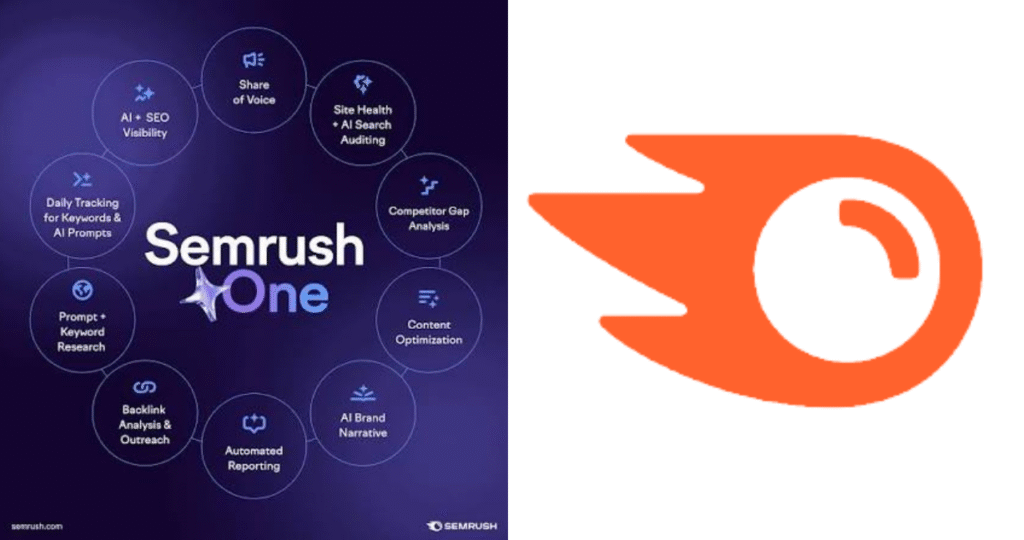
Semrush excels in this area, offering a wide range of integrations. It connects seamlessly with Google Search Console and Google Analytics, pulling data directly into its dashboard for a unified view of your organic performance. It also integrates with major social media platforms like Facebook, Twitter, and LinkedIn for social media management. For agencies, the integration with tools like Zapier and the API access allows for custom workflows and data extraction. The platform is designed to be a central hub for your entire digital marketing stack, which is a major selling point for businesses looking to consolidate their tools.
Ahrefs offers fewer native integrations compared to Semrush but focuses on what matters most for SEOs. It integrates with Google Search Console and Google Analytics, which are the primary sources of accurate performance data. The platform also integrates with some project management and reporting tools, but its ecosystem is more closed. Instead of offering a broad range of integrations, Ahrefs prioritizes having the best, most self-contained data possible. For many users, this is a strength because it ensures the data is clean and reliant on their powerful crawler, not on third-party sources that might have latency issues.
Moz offers solid integrations with Google Search Console and Google Analytics. This allows you to bring in your performance data and combine it with Moz’s metrics for a more complete analysis. The platform also offers integrations with social media platforms for post-scheduling and monitoring, though this is a secondary feature. Moz provides a good API for custom reporting, which is helpful for developers. Its ecosystem is not as sprawling as Semrush’s, but it covers the essential bases adequately, ensuring that you can bring in the data you need to make informed decisions without unnecessary complexity.
Evaluating Pricing and Value for Money
When it comes to investing in an SEO tool, the price tag is often the deciding factor for many businesses. All three of these platforms operate on a subscription model with tiered pricing. However, the value you get for your money depends entirely on your specific requirements. It is not just about the monthly cost; it is about the features, limits, and the return on investment you can expect from using the tool.
Semrush offers a variety of pricing tiers, starting with a Pro plan that is affordable for freelancers and small teams. The Guru plan is their most popular, offering more reports, limits, and features like the Content Marketing Platform. The Business plan is designed for larger agencies and enterprises with very high limits and white-labeling capabilities. Semrush often feels like the best value for money because you are getting an all-in-one marketing suite. You are paying for SEO, but you also get tools for paid advertising, social media, and content marketing, which justifies the cost for many organizations.
Ahrefs takes a different approach to pricing. It has a steeper entry point, but the higher tiers are more expensive than the competition. The structure is based on the number of keywords you track and the number of users. Ahrefs justifies its premium pricing by pointing to its superior data quality, particularly with its backlink index. For professionals who absolutely need the freshest, most comprehensive link data, the cost is entirely justified. The platform does not bundle in tools for other marketing channels, focusing exclusively on SEO, which some users appreciate.
Moz offers competitive pricing and is often the most accessible for small businesses. The Standard and Professional plans are reasonably priced and offer a good range of features. Moz is known for its transparent pricing and clear limits on reports and keywords. While its features are not as extensive as Semrush’s, the cost is lower, making it an attractive option for startups and smaller agencies. The inclusion of the highly regarded Moz Academy and their extensive community resources adds significant value, especially for those who are still learning the ropes of SEO.
Examining Customer Support and Community Resources
When you are stuck on a technical issue or need help understanding a feature, the quality of customer support can be a lifesaver. These tools all offer support, but their approaches and the resources they provide differ. A robust help center, responsive support team, and an active community can significantly enhance your experience with a platform. The level of support often reflects the company’s overall philosophy and commitment to its users.
Semrush provides excellent customer support with multiple channels. They offer 24/7 chat support, which is incredibly responsive and helpful. The support team is knowledgeable and can often solve complex issues in real-time. They also have a detailed knowledge base filled with articles, guides, and video tutorials. The Semrush community is vibrant, with forums where users can ask questions and share best practices. They also host regular webinars and events, which is a fantastic way to stay updated on the latest features and industry trends.
Ahrefs does not offer live chat or phone support. Their primary method of support is email, and they are known for being incredibly thorough and professional in their responses. While the lack of instant chat might be a downside for some, their turnaround time is usually impressive. They also have a massive, comprehensive knowledge base that covers pretty much every aspect of the tool. The “Ahrefs Academy” is a treasure trove of video courses that do not just teach you how to use Ahrefs, but also how to master SEO in general. This educational focus is a huge selling point for the platform.
Moz offers excellent support via chat and email. Their support team is friendly and highly knowledgeable about SEO, often going above and beyond to help users. They have a vast community forum called Moz Q&A, which is legendary in the SEO world. This is a great place to ask questions and get answers from Moz staff and other experts. Moz also has an extensive resource library and the “Learn SEO” section on their website, which is perfect for beginners. Their webinars and Whiteboard Friday series are also massively popular, providing valuable insights in a digestible format.
Who This Tool is Perfect For
Ultimately, the best tool for you depends on your specific role, the size of your team, and your overall goals. To help you make the final decision, let’s clearly define which user profile each tool fits best. There is no shame in admitting that one tool is a better fit for your situation than another, as all three are top-tier options.
If you are a busy digital marketer or agency owner who needs to manage everything from SEO to PPC to social media in one place, Semrush is your best bet. It is the Swiss Army knife of digital marketing tools. Its versatility and all-in-one nature make it incredibly efficient, saving you from having to purchase and juggle multiple subscriptions. It is perfect for those who need to present comprehensive, data-rich reports to clients and stakeholders.
If you are an experienced SEO professional or a link builder who lives and breathes backlinks and content research, Ahrefs is the tool for you. If your strategy is heavily reliant on analyzing your competitors’ link-building strategies and you need the freshest data available, Ahrefs is your weapon of choice. Its data fidelity is unmatched, and it provides the deepest dive into the web’s link structure.
If you are a small business owner, in-house marketer, or an SEO newbie, Moz is a fantastic choice. It is designed to be accessible, making it easier to understand complex concepts. The educational resources are second to none, and the interface is clean and non-intimidating. It provides all the core tools you need to run a successful SEO campaign without the overwhelming features that you might never use.
The Verdict on Which Tool You Should Choose
Making a choice between Semrush, Ahrefs, and Moz is a significant decision. After reviewing their strengths and weaknesses across all these categories, the verdict is that there is no single “best” tool, only the best tool for you. It is a choice that depends entirely on your unique circumstances. Let’s boil down the final decision-making process to a few key considerations to make it easier for you.
If you want a single platform that can handle your entire marketing stack, including SEO, paid advertising, and social media management, then Semrush is the clear winner. Its pricing is competitive for what you get, and its all-in-one nature simplifies your tech stack. It is a powerhouse for competitive intelligence and content marketing. The investment is worth it for agencies and marketers looking to streamline their operations and have everything in one dashboard.
If your primary focus is on data, particularly backlink data, and you are willing to invest in a premium product that excels in that area, Ahrefs is the champion. Its data freshness and accuracy are outstanding. It is the tool that professional SEOs and content strategists often gravitate towards when they need to get into the nitty-gritty details of their site’s performance and their competitors’ strategies. The learning curve is worth the payoff for those who need this level of depth.
If you are looking for a reliable, user-friendly, and educational tool that won’t break the bank, Moz is your answer. It is the tool that respects the beginner but also offers enough depth for smaller SEO teams. Its focus on community, education, and simplicity makes it an excellent choice for businesses just starting with SEO or for those who prefer a more straightforward, less intimidating approach to optimization. It is a trusted name that has proven its value over many years.
Final Thoughts and Recommendations
The SEO landscape is constantly shifting, and these three tools are at the forefront of that change. They are all investing heavily in artificial intelligence, machine learning, and new features to help you keep up. Choosing the right one is a strategic move that will either hold you back or propel you forward. It is a decision that deserves careful thought and consideration.
My strongest recommendation is to take advantage of the free trials that each of these tools offers. There is no substitute for hands-on experience. Spend a week with Semrush, a week with Ahrefs, and a week with Moz. Run your site through their audits, do some keyword research, and analyze a competitor. See which interface feels most intuitive to you. See which data you trust the most. The tool that you find yourself wanting to use every day is likely the right choice for you.
In closing, you cannot go wrong with any of these tools. They are all industry leaders for a reason. Semrush provides the best all-in-one suite, Ahrefs provides the most powerful data, and Moz provides the most accessible platform. The key is to align your choice with your business goals, your budget, and your personal workflow. No matter which one you pick, you are arming yourself with a powerful tool that will help you master the art and science of search engine optimization.