

The marketing fundamentals world is fast-paced and often chaotic. Trends like viral TikTok campaigns and AI updates appear and fade quickly, making it easy to get distracted by the latest tactics. However, the most successful brands share a key insight: real success relies on marketing fundamentals—timeless principles that persist regardless of trends. These fundamentals are the foundation that guides brands through the noise.
Think of building a house: start with the blueprint and foundation, not decorative details. In marketing, fundamentals serve as that blueprint—understanding your audience, your value, your communication, and relationship-building. Mastering these transforms marketing from mere campaigns into a strategic growth driver. This article dives into these pillars, showing how, no matter the tools, human psychology and sound strategy remain central to lasting business connections.
What Are Marketing Fundamentals?
Before we can build anything, we need to know what we’re working with. So, what exactly do we mean by marketing fundamentals? At its simplest, they are the core concepts, theories, and models that explain how marketing creates value and drives business growth. They are the “why” behind the “what.” While tactics are the specific actions you take (like running a Facebook ad or sending an email newsletter), fundamentals are the strategic thinking that informs which tactics to use, when, and for whom. They answer the big questions: Who is our customer? What problem do we solve for them? How do we reach them? How do we convince them? And how do we keep them?
These principles didn’t appear yesterday. They are the accumulated wisdom of decades of business practice, academic study, and psychological insight. They encompass everything from understanding basic economic exchange to the nuances of consumer behavior. A firm grasp of marketing fundamentals means you can walk into any business, in any industry, and ask the right questions to diagnose problems and craft effective solutions. It’s the difference between being a technician who knows how to use a tool and a strategist who knows which tool to use and why. In an age of rapid change, these fundamentals are your constants. They allow you to adapt tactics without losing strategic direction, ensuring that every effort aligns with the ultimate goal: profitably creating and keeping a customer.
The Bedrock of Strategy: The Marketing Mix (The 4 Ps)
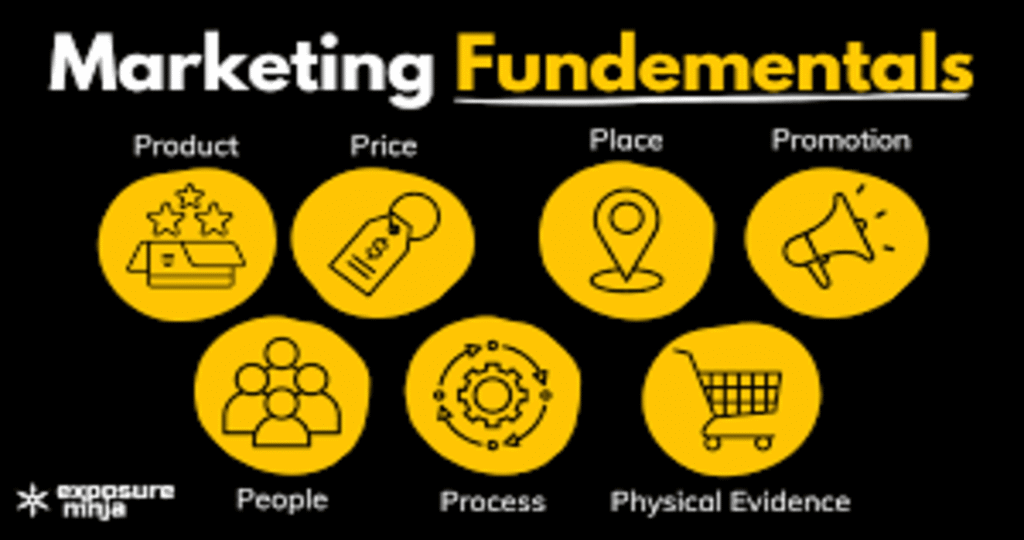
If there’s one model that stands as the cornerstone of marketing fundamentals, it’s the Marketing Mix, commonly known as the 4 Ps. Developed in the 1960s, this framework forces marketers to think holistically about the key levers they can control. It’s a reminder that marketing is not just about promotion; it’s about the entire offering. Let’s break down each “P” and understand its enduring relevance.
The first P is Product. This is the good or service you are offering to the market. marketing fundamentals thinking here goes beyond features and specifications. It asks: What core customer need or want does this product satisfy? What is the unique value proposition? What is the brand promise? The product must be designed with the customer in mind, from its functionality and quality to its design, packaging, and even the product line depth and breadth. You can have the best advertising in the world, but if the product itself doesn’t deliver value, your marketing efforts are built on sand. Getting the product right is the first and most critical fundamental.
Next is Price. This is the amount of money customers pay for the product. Pricing is a powerful signal. It communicates position in the market (luxury vs. budget), affects perception of quality, and directly determines profitability. Marketing fundamentals teach us that pricing isn’t just about covering costs and adding a margin. It involves understanding customer perceived value, analyzing competitor pricing, and considering psychological pricing strategies (like $9.99 vs. $10.00). A misstep in pricing can alienate your target audience or leave massive profit on the table. It is a strategic tool intimately connected to your overall brand and business goals.
The third P is Place, often called distribution. This refers to how the product reaches the customer. Will you sell directly online through your own e-commerce site? Through retail partners? In a physical store you own? The marketing fundamentals question is: Where does your target customer expect or prefer to find and buy this type of product? Making your product available at the right place, at the right time, is a marketing function. The rise of omnichannel marketing is just an evolution of this fundamental principle—creating a seamless customer experience whether the customer is online, on their phone, or in a physical store.
Finally, we have Promotion. This is the P most commonly associated with marketing, and it encompasses all the ways you communicate with your market to inform, persuade, and remind them about your product. This includes advertising, public relations, sales promotions, social media, content marketing, email campaigns, and more. The marketing fundamentals here is integrated marketing communications (IMC)—ensuring all your promotional messages are consistent and work together across different channels to tell a cohesive brand story. Promotion is about building a dialogue, not just a monologue, and it must be rooted in the truths established by the other three Ps.
Knowing Your Audience: Market Research and Customer Understanding
You can’t apply the 4 Ps effectively in a vacuum. Every decision must be informed by a deep, empathetic understanding of the people you hope to serve. This is where market research and customer insight come in—a non-negotiable marketing fundamentals. Guessing who your customer is or what they want is a recipe for wasted resources. The goal is to move from assumptions to evidence-based understanding.
This process starts with defining your target market and segmenting it into manageable groups. Market segmentation involves dividing a broad market into subsets of consumers who have common needs, preferences, or characteristics. These can be demographic (age, income), geographic (location), psychographic (lifestyle, values), or behavioral (purchase habits, brand loyalty). Once segmented, you choose which segment(s) to target—those where you have the greatest chance of success. This leads to positioning: crafting your product and brand message to occupy a distinct and valued place in the target customer’s mind relative to competitors. Are you the most convenient, the most luxurious, the most affordable, or the most innovative? Clear positioning is a direct result of solid marketing fundamentals.
But how do you gain these insights? Through systematic market research. This includes secondary research (analyzing existing data from reports, studies, and market analytics) and primary research (gathering new data directly from potential customers). Primary research can be quantitative (surveys, polls) to answer “what” and “how many” questions, or qualitative (interviews, focus groups) to answer “why” questions and explore emotions and motivations. In today’s digital world, social listening tools and website analytics provide a constant stream of behavioral data. The fundamental skill is synthesizing all this information to build detailed buyer personas—semi-fictional representations of your ideal customers that make strategic decisions human-centric. Truly understanding your audience is what separates strategic marketing from mere broadcasting.
The Heart of the Exchange: Value Proposition and Branding
At the intersection of your product and your customer sits the most crucial concept in all of marketing fundamentals: value. Marketing, at its core, is the process of creating, communicating, and delivering value to a target market. Your Value Proposition is a clear statement that explains how your product solves customers’ problems or improves their situation, delivers specific benefits, and tells the ideal customer why they should buy from you and not from the competition. It’s the reason someone chooses you.
Crafting a compelling value proposition requires ruthless clarity. It must articulate the unique value you provide. A strong value proposition is specific, quantifiable where possible, and focused on the customer’s gain. For example, it’s not “we make great software”; it’s “our project management software helps remote teams ship work 25% faster by reducing unnecessary meetings.” This fundamental statement should be the guiding light for all your marketing fundamentals efforts, from your website headline to your sales pitches. If you can’t succinctly state your value, you can’t expect customers to discern it.
Building on this value over time is what we call branding. Branding is far more than a logo or a color scheme. It is the sum total of all experiences, perceptions, and feelings a customer associates with your company. Strong branding turns a commodity into a cherished preference. The marketing fundamentals of branding involve consistently expressing your core values, personality, and promise across every single touchpoint. It’s what makes customers loyal, allows you to command a price premium, and gives your marketing messages context and meaning. A brand is a trust mark. It’s a shortcut in the consumer’s mind. Investing in building a strong, authentic brand is perhaps the most powerful long-term strategic move a business can make, and it all starts with a crystal-clear value proposition.
The Communication Engine: Marketing Channels and Content
With a strong product, clear value, and deep customer understanding, you now need to open the lines of communication. This is where the marketing fundamentals of channel strategy and content creation come into play. Channels are the pathways through which your messages reach your audience—social media platforms, search engines, email, your website, podcasts, television, etc. Content is the vehicle of your message—the blog post, video, infographic, webinar, or social media update that carries your value proposition.
The fundamental mistake here is trying to be everywhere at once. A strategic approach, rooted in marketing fundamentals, begins with a simple question: “Where does our target audience spend their time and attention?” If you’re targeting Gen Z, TikTok and Instagram Reels might be essential. If you’re selling enterprise software, LinkedIn and industry publications are likely more relevant. You must meet your customers where they already are, not where it’s convenient for you to be. Then, you must choose the right mix of owned (your website, blog, email list), earned (media coverage, shares), and paid (advertising) channels to reach them at different stages of their journey.
Content is the fuel for these channels. The modern marketing fundamentals is that marketing is no longer about interrupting people with ads; it’s about attracting them with value. This is the essence of content marketing: creating and distributing valuable, relevant, and consistent content to attract and retain a clearly defined audience. Your content should educate, entertain, inspire, or solve problems for your audience, thereby building trust and establishing your brand as an authority. A well-crafted blog post that answers a common customer question, an engaging video tutorial, or an insightful industry report—all are applications of this fundamental principle. Great content distributed through the right channels is how you start meaningful conversations and build relationships at scale.
Measuring What Matters: Analytics and ROI
“Half the money I spend on advertising is wasted; the trouble is I don’t know which half.” This famous adage from John Wanamaker haunts the history of marketing. In the past, it was often true. But one of the most transformative developments in modern marketing fundamentals is the ability to measure performance with incredible precision. Data and analytics have moved marketing from a creative art shrouded in mystery to a strategic discipline driven by evidence.
The core principle here is that every marketing activity should be tied to a goal and a key performance indicator (KPI). Vanity metrics like “likes” or “page views” are often less important than actionable metrics that tie to business outcomes, such as conversion rate, customer acquisition cost (CAC), lifetime value (LTV), lead quality, and return on ad spend (ROAS). Understanding these metrics is a critical marketing fundamentals. It allows you to move from opinion-based decisions (“I think this ad is good”) to data-based decisions (“This ad has a 5% conversion rate, which is 2x higher than the alternative, so we should allocate more budget to it”).
Setting up proper tracking—using tools like Google Analytics, CRM systems, and marketing automation platforms—is essential. This allows for attribution, the process of identifying which marketing touchpoints contributed to a sale or conversion. Did the customer come from a Google search, a social media ad, or a referral? Analytics help you understand the customer journey and optimize your spending. The ultimate goal is to understand your return on investment (ROI) for marketing activities. By continuously measuring, testing, and learning, you create a feedback loop that makes your marketing fundamentals more efficient and effective over time. This commitment to measurement is what separates professional, scalable marketing from amateur efforts.
The Modern Landscape: Digital Integration and Ethics
While the core marketing fundamentals are timeless, their application evolves with technology and society. Today, digital channels are not a separate entity; they are integrated into every aspect of the marketing mix. Digital integration is now a fundamental aspect. This means your product might be a SaaS platform, your price might use dynamic algorithms, your place is a global online store, and your promotion happens across social networks and search engines. Understanding the digital ecosystem—from SEO (Search Engine Optimization) and SEM (Search Engine Marketing) to email marketing automation and social media algorithms—is simply how the classic fundamentals are applied in a modern context.
However, with great power comes great responsibility. This brings us to another critical modern fundamental: ethical marketing. In an age of data privacy concerns, misinformation, and heightened social consciousness, how you market matters as much as what you market. Ethical marketing fundamentals include being transparent with data collection and use, avoiding deceptive advertising, promoting products responsibly, and ensuring inclusivity and representation in your messaging. Brands are increasingly expected to have a purpose beyond profit. Building trust through ethical practice is no longer optional; it’s a core component of long-term brand equity and customer loyalty. Marketing that manipulates or exploits may win short-term gains, but ultimately destroys the very foundation of trust it needs to survive.
Bringing It All Together: The Marketing Plan
A deep understanding of individual marketing fundamentals is useless without a framework to orchestrate them. That framework is the marketing plan. A marketing plan is a strategic document that outlines your marketing goals, strategies, tactics, budget, and metrics for a specific period. It’s the actionable output of all your foundational thinking. It starts with a situational analysis (often a SWOT analysis—assessing Strengths, Weaknesses, Opportunities, Threats) to understand your current position.
From there, you define clear, measurable objectives (e.g., “Increase market share by 5% in the next 12 months” or “Generate 500 qualified leads per quarter”). You then detail the strategies—the high-level approaches using the fundamentals we’ve discussed—to achieve those goals. For example, “Strategy: Differentiate our brand through thought leadership content marketing to attract small business owners.” The plan then outlines the specific tactics (the blog calendar, the social media schedule, the webinar series), allocates a budget, and establishes the KPIs for measurement. A well-written marketing plan aligns the entire organization, secures resources, and provides a roadmap for execution. It is the tangible proof that you are applying marketing fundamentals in a coherent, disciplined way to drive business growth.
Common Pitfalls and How to Avoid Them
Even with the best intentions, marketers can stumble by neglecting core marketing fundamentals. One of the most common pitfalls is tactical myopia—jumping straight into executing a tactic (like “we need to be on TikTok!”) without a supporting strategy rooted in audience understanding and business goals. This leads to fragmented, ineffective efforts. The antidote is to always start with strategy: Who are we targeting? What do we want to achieve? Then decide on the appropriate tactics.
Another major pitfall is inconsistency in messaging and branding. When sales materials say one thing, the website says another, and social media says something completely different, you confuse customers and dilute your brand. The fundamental solution is integrated marketing communications and strict brand guidelines. Similarly, neglecting to measure results or focusing on the wrong metrics means you’re flying blind. You must define success metrics upfront and have the analytics infrastructure in place to track them. Finally, a fatal flaw is being product-centric instead of customer-centric. Talking endlessly about your product’s features instead of the benefits and value it creates for the customer is a fundamental misstep. Always frame your communication around the customer’s world, not your own. Avoiding these pitfalls requires constant vigilance and a disciplined return to first principles.
The Future-Proof Skill Set
As we look to a future shaped by artificial intelligence, virtual realities, and technologies we can’t yet imagine, one thing is certain: the marketing fundamentals will remain relevant. AI is a powerful tool for personalization, analytics, and content creation, but it cannot replace the human-centric strategic thinking that defines marketing. AI cannot define your brand purpose, craft your authentic value proposition, or build genuine emotional connections. It can optimize, but it cannot conceive the core strategy.
Therefore, the future-proof marketer is not just a tech whiz but a master of the fundamentals. They are a strategic thinker, a student of human psychology, a storyteller, and a data interpreter. They understand that technology is a means to an end, and the end is always to create value for a human being. By grounding yourself in the timeless principles of product, price, place, promotion, customer understanding, value, and measurement, you equip yourself to adapt to any new platform or trend. You won’t be chasing the algorithm; you’ll be using it to serve a timeless human need. In the end, marketing is about people. And while the tools change, people—their desires, fears, and motivations—change very slowly. That’s why marketing fundamentals are, and will always be, your ultimate competitive advantage.
Comparison of Marketing Eras
| Primary Channel | Mass Media (TV, Radio, Print) | Digital & Social Media, Owned Assets | Place & Promotion: Moving from broad interruption to targeted, multi-channel engagement. |
| Communication Model | One-to-Many (Monologue) | One-to-One / Many-to-Many (Dialogue) | Customer Understanding: Leveraging insights for personalized, two-way conversations. |
| Measurement Focus | Reach, Frequency, Gross Rating Points | Conversion Rate, CAC, LTV, ROI, Engagement | Analytics: Shifting from estimated reach to precise performance and return-on-investment tracking. |
| Content Dynamic | Brand-Created, Highly Polished | User-Generated, Authentic, Evergreen & Real-Time | Value Proposition: Evolving from controlled messaging to providing ongoing value and fostering community. |
| Customer Relationship | Transactional | Relational & Subscription-Based | Branding: Moving from single sales to building long-term loyalty and lifetime customer value. |
Expert Insights on Fundamentals
“Marketing is no longer about the stuff that you make, but about the stories you tell.” – Seth Godin
This quote underscores the fundamental shift from product-centric feature-listing to customer-centric storytelling and value communication, which is at the heart of branding and content creation.
“The aim of marketing is to know and understand the customer so well that the product or service fits him and sells itself.” – Peter Drucker
Drucker brilliantly captures the ultimate goal of marketing fundamentals: deep customer understanding leading to a perfect product-market fit, making promotion more about discovery than persuasion.
“Data is the new oil. It’s valuable, but if unrefined, it cannot really be used. It has to be changed into gas, plastic, chemicals, etc., to create a valuable entity that drives profitable activity.” – Clive Humby
This speaks directly to the modern marketing fundamental of analytics. Raw data is useless; the skill is in refining it into actionable insights (refined oil) that inform strategy and drive growth.
Conclusion
In our journey through the essential principles that govern effective marketing, one theme resounds with unmistakable clarity: mastery of marketing fundamentals is not a starting point to be quickly passed, but the continuous core of enduring success. The whirlwind of new platforms, viral trends, and technological tools can create an illusion of constant revolution, but the bedrock beneath remains steady. Understanding your customer, crafting undeniable value, building a trustworthy brand, communicating with strategic clarity, and rigorously measuring impact—these are not old-fashioned ideas. They are the timeless gears that turn the engine of business growth.
Embracing these fundamentals is what allows a marketer or a business to move from reactive scrambling to proactive strategy. It transforms marketing from a series of disconnected tactics into a coherent, powerful system. Whether you’re a seasoned CMO or a budding entrepreneur, the most valuable investment you can make is in strengthening your command of these core concepts. They will help you allocate resources wisely, build campaigns that resonate, create a brand that people love, and ultimately, drive sustainable profitability. In a world of noise, the fundamentals are your signal. Return to them, trust them, and let them guide your way forward.
Frequently Asked Questions
Why are marketing fundamentals still important in the age of AI and automation?
AI and automation are extraordinary tools for executing and optimizing marketing at scale, but they operate on the instructions and strategy provided by humans. The marketing fundamentals—like defining your target audience, crafting your unique value proposition, and establishing your brand positioning—are strategic human tasks. AI needs this foundational input to function effectively. It can personalize a message, but a human must define the core message. It can analyze data, but a human must decide what business goal the data serves. In essence, AI handles the “how” with incredible speed, but the marketing fundamentals define the “who,” “what,” and “why” that make the “how” meaningful.
How much time should a new business spend on marketing fundamentals versus just getting sales?
This is a common tension for entrepreneurs. While the urgency to generate cash flow is real, skipping the marketing fundamentals is a classic false economy. You might secure a few early sales through sheer hustle, but without a clear understanding of your ideal customer, your value proposition, and your messaging, growth will quickly plateau and become inefficient. A balanced approach is key. Dedicate focused time upfront to establish the basics: define your target customer persona, articulate your core value proposition, and set up simple tracking for your efforts. This foundational work, which need not take months, will make every hour and dollar you spend on sales and promotion infinitely more effective, turning scattered effort into a scalable strategy.
Can you have good marketing with a mediocre product if the fundamentals are strong?
This is a critical question that tests the integrity of marketing fundamentals. The short answer is: only temporarily. The fundamental principle of the “Product” in the 4 Ps states that the product must deliver value. Brilliant marketing can create compelling awareness and generate initial trial for a mediocre product. However, marketing fundamentally includes the post-purchase experience and customer satisfaction. If the product fails to live up to the promise communicated by the marketing, customer disappointment, negative reviews, and high churn will follow. This destroys brand equity and makes customer acquisition cost unsustainable. Strong marketing fundamentals teach that a great product is the foundation; marketing amplifies its truth, but it cannot permanently disguise its failures.
What’s the single most important marketing fundamentals for a small budget?
If forced to choose one, it would be deep customer understanding. With a small budget, you cannot afford to waste money talking to the wrong people or saying the wrong thing. Investing time in truly understanding your ideal customer—their pains, desires, language, and where they spend their time—allows for hyper-efficient marketing. You can create highly targeted, relevant content and messages that resonate deeply. You can choose the one or two most effective channels instead of spreading yourself thin. This focus, derived from a fundamental grasp of your audience, ensures that every limited dollar you spend has the highest possible chance of converting, maximizing your return on investment.
How often should a company revisit its core marketing fundamentals?
A company’s core marketing fundamentals should be reviewed at least annually as part of the strategic planning process. Markets evolve, competitors shift, and customer preferences change. However, they should also be revisited during any significant business milestone, such as launching a major new product, entering a new market, or experiencing unexpected growth or downturn. The fundamentals are not meant to be carved in stone forever; they are a living framework. Regularly asking, “Is our value proposition still relevant? Has our target audience evolved? Are we still positioned correctly against new competitors?” ensures your strategy stays aligned with reality. This periodic check-up prevents strategic drift and keeps your marketing grounded and effective.