

Aveley FC Football Club, affectionately known as “The Millers,” represents the heart and soul of non-league football in Essex. Based in the village of Aveley FC, Thurrock, this historic club has spent the best part of a century clawing its way up the English football pyramid, embodying the grit and passion that make the lower leagues so compelling. While they may not have the billionaire backers or global superstars of the Premier League, Aveley FC offers something perhaps more authentic: a deep connection to its community and a recent history marked by remarkable momentum.
In recent seasons, The Millers have transformed from steady Isthmian League inhabitants into genuine promotion contenders, reaching the National League South for the first time in their history. This article takes a deep dive into the soul of the club, tracing its journey from meadow pitches to the modern artificial surface at Parkside. Whether you are a die-hard non-league enthusiast or a curious neutral, understanding Aveley FC is to understand the beautiful game at its grassroots level. We will explore their storied past, their state-of-the-art home, the heroes who have donned the shirt, and what the future holds for this ambitious outfit.
The Humble Beginnings: From Local Pitches to League Football
The story of Aveley FC begins in 1927, a time when football was rapidly cementing itself as the pastime of the working class. For the first two decades of their existence, the club remained in relative obscurity, playing friendly matches and participating in local tournaments, until the outbreak of the Second World War temporarily halted proceedings. It was in the post-war era that the club truly began to find its feet. In 1946, they joined the Thurrock Combination League, a period that yielded their first significant silverware: back-to-back Essex Junior Cup victories in 1948 and 1949 https://en.wikipedia.org/wiki/Aveley_FC.
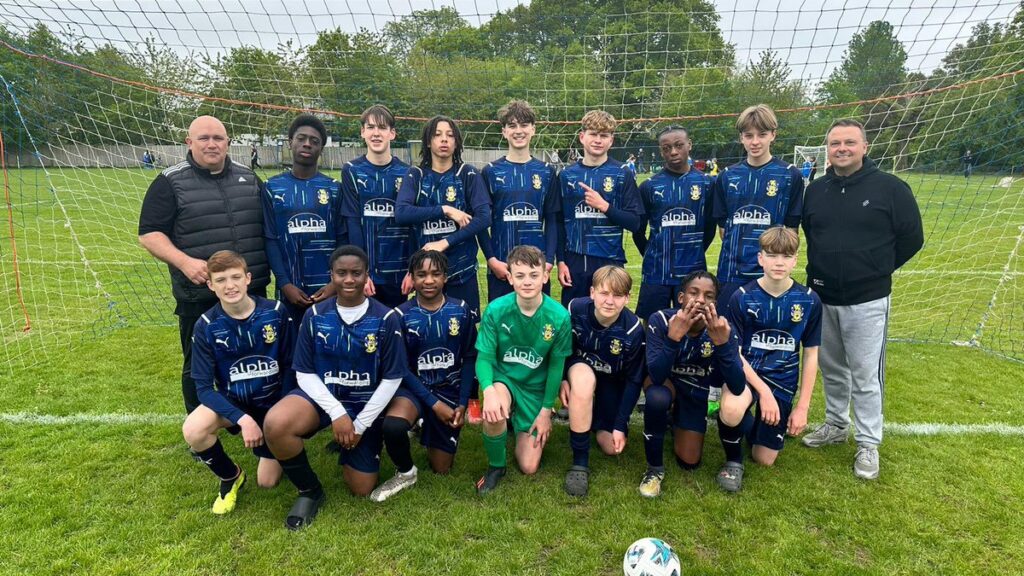
This success proved to be a springboard for further growth. In 1949, the club took a significant step up by joining Division Two of the London League. The move south of the River Thames suited them perfectly. After a respectable fourth-place finish in their debut season, they secured promotion to Division One. They didn’t stop there; the following year, they lifted the Division One title, although a quirk in the league structure at the time denied them immediate promotion to the Premier Division https://en.wikipedia.org/wiki/Aveley_FC. Their patience paid off, however, and by the mid-1950s, Aveley FC had established itself as a force in the London League, culminating in winning the Premier Division title in 1955.
The quest for greater challenges saw The Millers flit between leagues, a common theme for ambitious non-league sides looking for the best fit. They spent time in the Delphian League, finishing as runners-up in their first season, and later joined the Athenian League https://en.wikipedia.org/wiki/Aveley_FC. The 1970–71 season was a particular highlight of this era, as they clinched the Athenian League Division One title, earning promotion to the Premier Division and signalling their intent to climb the football pyramid. This period of fluctuation was not just about finding competitive balance, but also about building a reputation as a well-run club capable of punching above its weight.
The Isthmian League Years: A Rollercoaster of Fortunes
The move to the Isthmian League in 1973 marked a long-term commitment to a higher standard of football. For decades, Aveley FC became synonymous with this league, experiencing the full spectrum of emotions that non-league football offers. Initially joining Division Two, the club oscillated between divisions, struggling with consistency despite flashes of brilliance. They enjoyed cup success, winning the Essex Thameside Trophy in 1980 and the Hornchurch Charity Cup in 1983, but league form remained elusive https://en.wikipedia.org/wiki/Aveley_FC.
The late 1980s and early 1990s were a period of “yo-yo” fortunes. Relegation in 1986 was a low point, but the response was immediate and emphatic. In the 1989–90 season, The Millers made history by becoming the first club from the bottom division to win the prestigious Isthmian League Cup, a testament to their cup-fighting spirit https://en.wikipedia.org/wiki/Aveley_FC. This success was married with a second-place finish in the league, securing an immediate return to Division One. However, the stability they craved was hard to find. After a promising fourth-place finish upon their return, the club suffered consecutive bottom-place finishes, leading to another relegation and eventually finding themselves in Division Three by the mid-90s.
For a club with ambitions as high as Aveley, the doldrums of Division Three were a wake-up call. The turn of the millennium brought with it league restructuring and a renewed sense of purpose. After years of consolidation, the club began to build again. The appointment of ambitious managers and a focus on youth development started to bear fruit. The 2008–09 season under manager Rod Stringer proved to be a watershed moment. The Millers stormed to the Isthmian League Division One North title, scoring goals for fun and playing an attractive brand of football that packed the terraces at the old Mill Field https://en.wikipedia.org/wiki/Aveley_FC.
Promotion to the Isthmian League Premier Division felt like the club had finally arrived at a level commensurate with its support base. They finished an impressive third in their first season back, qualifying for the play-offs. Although they fell short against Boreham Wood, the message was clear: Aveley FC was no longer just making up the numbers; they were contenders https://en.wikipedia.org/wiki/Aveley_FC. The journey wasn’t always linear—relegation in 2012 was a setback—but the resilience built over decades meant they were never down for long. A fifth-place finish and play-off appearance the very next season showed the squad’s character.
The Danny Scopes Era and Historic Promotions
If there is a modern architect of Aveley FC’s recent success, it is Danny Scopes. Taking the reins, Scopes instilled a professionalism and winning mentality that elevated the entire club. The 2021–22 season was nothing short of spectacular. The Millers were dominant, finishing as champions of the Isthmian League Division One North, scoring prolifically and displaying a defensive solidity that left opponents frustrated https://en.wikipedia.org/wiki/Aveley_FC. This return to the Premier Division felt different; there was a sense of destiny about this group of players.
The 2022–23 season will be etched into the memory of every Aveley fan forever. Not only did they secure the Isthmian League Cup with a comprehensive 3-0 victory over Potters Bar Town, but they also mounted a serious promotion challenge https://en.wikipedia.org/wiki/Aveley_FC. Finishing fourth in the league, they entered the play-offs with momentum. A gritty semi-final win over local rivals Canvey Island set up a final against Hornchurch. In front of a fervent crowd, The Millers dug deep, securing a 1-0 victory that sparked wild celebrations. The result was a second consecutive promotion, this time to the National League South. For the first time in their 96-year history, Aveley FC had reached the sixth tier of English football.
Life in the National League South was a learning curve, but The Millers adapted admirably. In the 2023–24 season, they finished a highly credible 7th, defying pre-season predictions that had them tipped for an immediate relegation https://en.wikipedia.org/wiki/Aveley_FC. They even secured a play-off spot, eventually losing to Maidstone United. This season proved they belonged at this level, playing attractive football against fully professional sides and holding their own.
A New Chapter: Relegation and the Brett Munyard Era
Football, however, is a game of fine margins. The 2024–25 season proved to be a bridge too far for the squad. Despite their best efforts, aveley fc found themselves unable to replicate the form of the previous year and were relegated back to the Isthmian League Premier Division. It was a bitter pill to swallow, but it also signalled the end of an era. Danny Scopes, the architect of their greatest triumphs, announced he would be stepping down at the end of the season, leaving behind gigantic boots to fill https://thurrock.nub.news/sports/football/new-boss-announced-by-aveley-5359.
In April 2025, the club moved quickly to appoint his successor: Brett Munyard. The new boss arrived with a growing reputation for developing players and implementing an attractive style. Having secured promotions with White Ensign and performed well at Brightlingsea Regent, Munyard represents a new generation of coaching talent https://thurrock.nub.news/sports/football/new-boss-announced-by-aveley-5359. His arrival signals that, despite the relegation, Aveley FC intends to bounce back immediately.
Upon his appointment, Chief Executive Craig Johnson expressed his delight, stating, “Brett is a young, hungry, and enthusiastic manager who has had a great start to his managerial career, and his vision for the future matches that of ours.” https://thurrock.nub.news/sports/football/new-boss-announced-by-aveley-5359 Munyard himself acknowledged the challenge ahead but radiated confidence: “It is extremely big boots to fill after the great job Danny had done here, but I guarantee I will work tirelessly to make this club successful once again.” https://thurrock.nub.news/sports/football/new-boss-announced-by-aveley-5359 The message from the club is clear: relegation is a temporary setback, and the focus is firmly on returning to the National League South.
The Fortress of Parkside Stadium
A football club is nothing without its home, and for Aveley FC, the Parkside Stadium represents a bright, modern future. The club spent the majority of its life at the old Mill Field, a traditional non-league ground purchased and built by supporters in 1952 https://en.wikipedia.org/wiki/Aveley_FC. It was there they earned the nickname “The Millers,” and it served them well for over six decades. However, as the club grew, so did the need for better facilities. The move to Parkside in 2017 was a game-changer.
Built on the site of a former gravel pit, the new stadium is a far cry from the quaint, ramshackle charm of Mill Field https://en.wikipedia.org/wiki/Aveley_FC. It is a functional, modern sports venue with a capacity of 3,500, although the official seated capacity is often noted at around 2,500 depending on the configuration for league games https://www.transfermarkt.co.za/aveley-fc/stadion/verein/26658. One of the standout features is the 3G artificial turf pitch. Measuring a full-size 105m x 68m, this surface allows for attractive, passing football regardless of the weather and is a massive asset to the club, enabling it to generate revenue through community use and ground-sharing https://www.transfermarkt.co.za/aveley-fc/stadion/verein/26658.
The stadium is thoughtfully designed, featuring two seated stands on either side of the pitch. One of these is cleverly integrated into the clubhouse, with the overhang of the roof providing cover for spectators, creating a fantastic atmosphere and a great view while enjoying a beverage https://en.wikipedia.org/wiki/Aveley_FC. Behind each goal, covered terraces ensure that the traditional standing supporter is well catered for. Parkside has quickly become a hub for local football, hosting games for several other clubs, including Grays Athletic and Hashtag United Women, and even staging matches during the prestigious CONIFA World Cup in 2018 https://en.wikipedia.org/wiki/Aveley_FC. For fans visiting, the post-match chat in the clubhouse, looking out over the artificial pitch, is one of the best experiences in the Isthmian League.
Current Squad and Key Players
Building a competitive squad in the Isthmian League requires a blend of youthful energy and veteran savvy. As Aveley FC looks to push for an immediate promotion under Brett Munyard, the squad assembled for the 2025–26 season reflects this philosophy. According to data from the season, the squad is relatively young, with an average age hovering around the mid-20s, indicating a focus on high-energy, dynamic football https://www.transfermarkt.co.in/aveley-fc/kadernaechstesaison/verein/26658/saison_id/2025.
In goal, the experienced Jonathan North provides a steady pair of hands. Having been with the club during their National League South adventures, his leadership from the back is invaluable. He is ably backed up by the young Dougie Yates, one for the future, who is learning from one of the best in the league https://en.wikipedia.org/wiki/Aveley_FChttps://www.transfermarkt.co.in/aveley-fc/kadernaechstesaison/verein/26658/saison_id/2025.
The defence is marshalled by the likes of Tommy Davis and Harry Gibbs, players who understand the physicality of the league. The backline also boasts international pedigree; Jalen Jones, who represents Guyana, brings a touch of exotic flair and athleticism to the right side of defence https://en.wikipedia.org/wiki/Aveley_FC. The midfield engine room is where games are won and lost, and Aveley boasts plenty of creativity. Kenny Aileru is a dynamic presence on the wing, while the likes of Ollie Peters and Hamza Semakula provide the legs and passing range in the centre of the park https://en.wikipedia.org/wiki/Aveley_FChttps://www.transfermarkt.com.ar/aveley-fc/kader/verein/26658.
Up front, the Millers have a potent mix of power and finesse. Charlee Hughes is the classic target man, capable of holding the ball up and bringing others into play. Alongside him, the tricky Alex Hernandez provides the flair and finishing ability to trouble any defence in the division https://en.wikipedia.org/wiki/Aveley_FC. The squad depth, featuring talents like Matt Rush and veteran Lionel Ainsworth, ensures that Munyard has multiple tactical options from the bench. The blend of youth and experience in this squad suggests that Aveley has the tools to be right at the top end of the table.
Recent Form and League Standing
Navigating the Isthmian League Premier Division is a marathon, not a sprint. As the 2025–26 season progresses, Aveley FC has shown it is more than capable of mixing it with the division’s best. Early season form has seen them firmly establish themselves in the play-off places, demonstrating that the relegation of the previous year has not dampened their spirits.
Looking at the statistics from the turn of the year, The Millers have been in impressive goal-scoring form. In a ten-match stretch analyzed by fans, they scored an average of 2.4 goals per game, showcasing the attacking philosophy that Brett Munyard has instilled https://fscore.co.za/game_info/aveley-fc-cray-valley-paper-mills-fc-2026-01-24. A notable 3-1 victory over Canvey Island in early January 2026 demonstrated their ability to win crucial local derbies https://fscore.co.za/game_info/aveley-fc-canvey-island-2026-01-03. This was followed by a dominant 3-0 away win against Cray Wanderers, a result that sent a shudder through the rest of the league https://fscore.co.za/game_info/aveley-fc-cray-valley-paper-mills-fc-2026-01-24.
As of late January 2026, the league standings showed Aveling FC sitting comfortably in 4th place, well within the promotion play-off positions https://fscore.co.za/game_info/aveley-fc-cray-valley-paper-mills-fc-2026-01-24. They were nestled between high-flying Folkestone Invicta and play-off rivals like Dartford. While the league is highly competitive, with teams like Witham Town and Brentwood Town also vying for the top spots, Aveley’s consistency has been key. The challenge for Munyard will be to maintain this momentum through the hectic winter period and into the spring, ensuring that his squad peaks at the right time for another crack at promotion.
Comparison Table: Aveley FC Recent Performance (2025-26 Season Snapshot)
To better understand the competitive landscape for Aveley FC, here is a comparison of their performance metrics against key rivals in the Isthmian League Premier Division based on form around January 2026. This data highlights the attacking prowess of The Millers.
| League Position (Jan 2026) | 4th | 1st | 5th | 6th |
| Goals Scored (per match) | 2.4 | High | Mid-Range | Mid-Range |
| Defensive Solidity (Goals Conceded) | Moderate | Very Strong | Strong | Moderate |
| Recent Form (Wins in last 5) | 3 Wins | 4 Wins | 2 Wins | 3 Wins |
| Play-off Status | In Play-offs | Automatic Promotion | In Play-offs | In Play-offs |
| Key Attribute | Attacking Flair | Consistency | Physicality | Home Form |
Source: Data aggregated from Fscore match reports https://fscore.co.za/game_info/aveley-fc-canvey-island-2026-01-03https://fscore.co.za/game_info/aveley-fc-cray-valley-paper-mills-fc-2026-01-24.
Club Honours and Record Books
A club’s history is written in its trophy cabinet and record books. For Aveley FC, the honours list reflects a journey of consistent achievement across different eras. While they may not have a cabinet full of FA Vases, the silverware they do have marks significant milestones in their development.
League Honours:
- Isthmian League Division One North: Champions (2008–09, 2021–22) https://en.wikipedia.org/wiki/Aveley_FC
- Athenian League Division One: Champions (1970–71) https://en.wikipedia.org/wiki/Aveley_FC
- London League Premier Division: Champions (1954–55) https://en.wikipedia.org/wiki/Aveley_FC
- London League Division One: Champions (1950–51) https://en.wikipedia.org/wiki/Aveley_FC
Cup Honours:
- Isthmian League Cup: Winners (1989–90, 2022–23) https://en.wikipedia.org/wiki/Aveley_FC
- Essex Thames-Side Challenge Trophy: Winners (1979–80, 2004–05, 2006–07) https://en.wikipedia.org/wiki/Aveley_FC
- Essex Junior Cup: Winners (1948, 1949) https://en.wikipedia.org/wiki/Aveley_FC
For the statisticians and trivia fans, the club records are a fascinating look into the past. The record attendance at the old Mill Field stands at a whopping 3,741 for a fixture against Slough Town in 1971, a figure that highlights the immense local interest during that period https://en.wikipedia.org/wiki/Aveley_FC. The club’s best performance in the FA Cup remains reaching the First Round in the 1970–71 season, a run that would have put them in the draw with the big boys of the Football League https://en.wikipedia.org/wiki/Aveley_FC.
The ultimate goalscorer in the club’s history is Jotty Wilks, whose name is legendary among the older generation of fans for netting 214 times for the club https://en.wikipedia.org/wiki/Aveley_FC. Close behind him in the pantheon of greats is Ken Riley, whose record of 422 appearances is a testament to his loyalty and consistency over the years https://en.wikipedia.org/wiki/Aveley_FC. These records provide a benchmark for the current squad to aspire to as they write the next chapter of Aveley FC history.
The Future: Ambition and Community
Looking ahead, the future for Aveley FC appears bright. While the relegation from the National League South was disappointing, it has allowed the club to reset under new management with a clear mandate: return stronger. Brett Munyard’s appointment signals a commitment to progressive, attacking football and player development. The club’s infrastructure, particularly the Parkside Stadium, is already at a standard that would be the envy of many clubs higher up the pyramid.
The artificial pitch is not just a playing surface; it is a revenue generator and a community asset. By hosting other teams and allowing for year-round usage, Aveley FC has cemented its place as a hub for sport in the Thurrock area. This financial stability is crucial at a level where many clubs live hand-to-mouth. The board, led by Chairman Graham Gennings, has shown prudence and ambition in equal measure, ensuring that the club lives within its means while still investing in the playing squad https://en.wikipedia.org/wiki/Aveley_FC.
Ultimately, the soul of Aveley is its community. The supporters, who have followed the team from the meadows to Mill Field to Parkside, are the constants in an ever-changing game. Their passion creates the atmosphere that makes Parkside a difficult place for visiting teams. As the club pushes for promotion back to the National League South, it does so with the wind in its sails. The blend of a modern stadium, a hungry young manager, and a loyal fanbase suggests that the glory years for Aveley FC might still be just around the corner.
Frequently Asked Questions about Aveley FC
What is the official nickname of Aveley FC, and how did they get it?
The official nickname of Aveley FC is “The Millers.” The club adopted this name after moving to their former ground, Mill Field, in 1952. The new stadium was built on land purchased by supporters, and the name was a natural fit, reflecting their new home and becoming a permanent part of the club’s identity https://en.wikipedia.org/wiki/Aveley_FC.
Where does Aveley FC play their home games, and what is the capacity?
Aveley FC plays its home games at the Parkside Stadium, located on Park Lane in Aveley. The stadium has a total capacity of approximately 3,500, although official league figures often cite a seated capacity of around 2,500. It features a modern 3G artificial pitch, two seated stands, and covered terraces behind each goal https://en.wikipedia.org/wiki/Aveley_FChttps://www.transfermarkt.co.za/aveley-fc/stadion/verein/26658.
Who is the current manager of Aveley FC?
The current manager of Aveley FC is Brett Munyard. He was appointed in April 2025, succeeding the highly successful Danny Scopes. Munyard joined the club after previous managerial spells at Maldon & Tiptree, Brightlingsea Regent, and White Ensign, where he secured multiple promotions https://thurrock.nub.news/sports/football/new-boss-announced-by-aveley-5359.
What league does Aveley FC play in for the 2025-26 season?
For the 2025–26 season, Aveley FC competes in the Isthmian League Premier Division. This is the seventh tier of the English football league system. The club was relegated from the National League South at the end of the previous season but is aiming for an immediate promotion back https://thurrock.nub.news/sports/football/new-boss-announced-by-aveley-5359https://fscore.co.za/game_info/aveley-fc-canvey-island-2026-01-03.
Has Aveley FC ever played in the FA Cup first round?
Yes, Aveley FC’s best performance in the FA Cup came during the 1970–71 season when they reached the First Round proper. This is the furthest the club has ever progressed in the world’s oldest cup competition, marking a significant achievement in their history https://en.wikipedia.org/wiki/Aveley_FC.
Why was Aveley FC recently in the news regarding the Essex Senior Cup?
In early 2026, Aveley FC was in the news after being expelled from the Essex Senior Cup. The club was removed from the competition for fielding an ineligible player in their semi-final victory over Billericay Town. The club expressed disappointment, stating they were misinformed about the player’s status, while Billericay maintained that eligibility responsibility rests with the selecting club https://www.bbc.co.uk/sport/football/articles/crl485r4w81o.
Conclusion
In the grand tapestry of English football, clubs like Aveley FC are the threads that hold the entire picture together. They represent tradition, community, and the pure, unadulterated love of the game. From their founding in 1927 to their recent exploits in the National League South, The Millers have consistently defied expectations. They have weathered relegations, celebrated promotions, and built a modern home that is the envy of clubs at their level.
The journey under new manager Brett Munyard is just beginning, but the foundations are solid. With a talented squad, excellent facilities at Parkside, and a loyal fanbase behind them, the future is bright. Whether you are a resident looking for Saturday afternoon entertainment or a neutral observer drawn to the romance of the FA Cup, Aveley FC offers a genuine football experience. As they push for a return to the sixth tier, one thing is certain: the spirit of The Millers remains unbroken. They are not just a football club; they are a testament to the enduring power of local sport.