

how to Shazam a video all been there. You’re curled up on the couch, deeply immersed in a gripping movie scene, when a hauntingly beautiful melody swells in the background. Your fingers instinctively tap, searching for a phone that isn’t there. Or you’re scrolling through social media, and a creator uses a fantastic, obscure track you simply must add to your playlist. The moment passes, the video ends, and the song is lost to the digital ether, leaving you with nothing but a vague hum and a sense of musical FOMO. This frustration, this modern-day dilemma of the unknown soundtrack, is precisely why the question of how to Shazam a video has become so crucial.
In today’s media-saturated world, music isn’t confined to radios and streaming apps. It’s woven into the fabric of every video we consume—from blockbuster films on Netflix and YouTube deep-dives to fleeting Instagram Stories and viral TikTok clips. The audio is often as important as the visual, shaping emotion and driving narrative. Fortunately, the powerful technology that revolutionised song identification from live environments has evolved. You absolutely can, and should, know how to Shazam a video, whether it’s playing on your phone, your television, or even a friend’s device. This comprehensive guide is your master key. We’ll move beyond the basic app tap and explore the myriad of methods, built-in features, and clever workarounds that ensure no song, in any video context, ever escapes you again. Consider this the definitive manual for becoming a video soundtrack detective.
Understanding the Magic Behind Shazam
Before we dive into the practical steps, it’s fascinating to understand what happens when you ask how to Shazam a video to listen. The process is a marvel of modern audio fingerprinting, not merely a simple recording match. When you initiate Shazam, it doesn’t store or analyse the entire song. Instead, it captures a short snippet of the audio—just a few seconds is often enough. This snippet is converted into a digital fingerprint, a unique spectrogram that maps the audio’s frequencies and amplitudes over time. Think of it not as a photograph of the sound, but as a highly detailed, mathematical signature.
This fingerprint is then whipped across the internet to Shazam’s massive, constantly updated database, which contains millions of song fingerprints. The algorithm performs a lightning-fast search, looking for a match to this unique signature. It’s clever enough to filter out background noise, dialogue, and sound effects that might be present in a video, focusing on the core musical elements. This is why learning how to Shazam a video effectively often involves maximising the clarity of the music for those few seconds. The entire process, from tap to result, usually takes mere moments, a testament to the sophisticated technology working behind the scenes to solve your musical mystery.
The Standard Method: How to Shazam a Video on Your Mobile Device
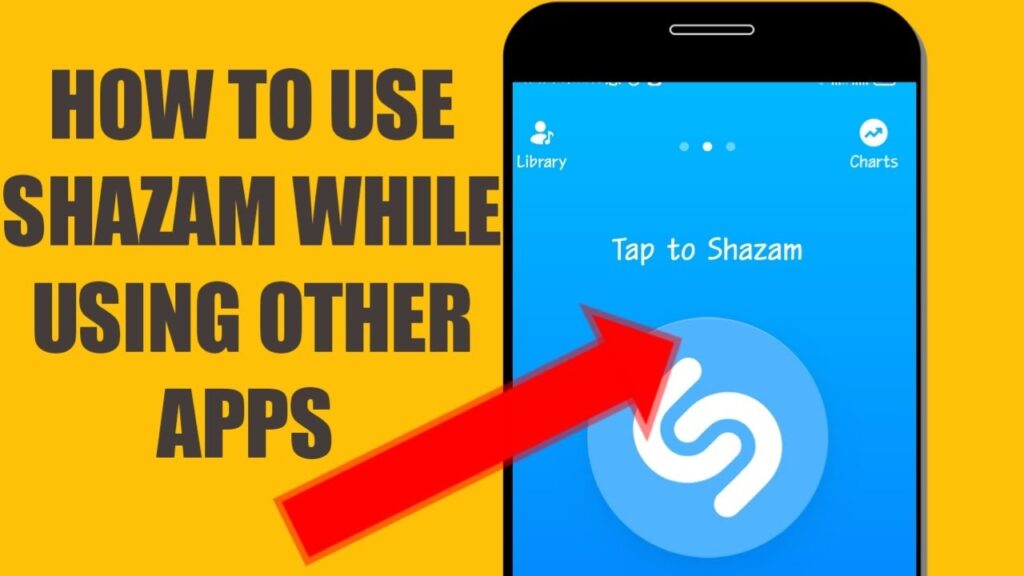
This is the most straightforward scenario and the one how to Shazam a video was born to handle. You’re watching a video directly on your smartphone or tablet—be it on YouTube, Instagram, TikTok, Facebook, or in your camera roll. The process is beautifully simple and universal. First, ensure you have the Shazam app installed (it’s free on both iOS and Android) and that it has the necessary permissions to access your microphone. Now, when that captivating tune begins to play, don’t pause the video. Simply open your Shazam app and tap the large, iconic blue button. Let the video continue playing for about 10-15 seconds.
Shazam will listen, analyse, and in most cases, proudly display the song title, artist, and album art. You can then directly open the song in your preferred streaming service, like Apple Music or Spotify, to save it instantly. A critical pro-tip for mastering how to Shazam a video on a mobile device is to manage your audio sources. If you’re wearing Bluetooth headphones, the app might use your phone’s internal microphone, which can be less effective. For the cleanest identification, play the video audio through your device’s speaker or ensure your headphones have a built-in passthrough microphone. Remember, the goal is to let Shazam hear the audio as clearly as possible, just as you do.
Conquering the Big Screen: How to Shazam a Video on Your TV or Computer
The challenge escalates, but so do the solutions, when how to Shazam a video is playing on a separate screen. You’re watching a film on Netflix, a series on Hulu, or a music documentary on your laptop, and the soundtrack captivates you. You can’t tap the TV screen itself, so you need a strategic approach. The most effective method is to use the Shazam app on your phone as a remote microphone. Crank up the TV or computer volume to a reasonable level, ensuring the music is the dominant sound in the room. Then, open Shazam on your phone, hold it towards the speakers, and tap the button.
Minimise background noise in your environment—mute other devices, ask people to pause their conversation for a moment. This method of how to Shazam a video on an external screen works surprisingly well with modern surround sound systems, though positioning your phone closer to the central channel speaker can improve accuracy. For computers, the same principle applies: play the video, let the audio come through the speakers, and use your phone’s Shazam app as the receiver. It’s a simple yet powerful way to bridge the gap between your separate devices and unite them in the quest for song identification.
Leveraging Built-In System Integrations: Siri, Google Assistant, and Pixel
Modern operating systems have baked Shazam’s functionality directly into their core, creating seamless pathways to identify music. This is arguably the fastest and most integrated way to learn how to Shazam a video without even opening an app. For Apple users with iOS or iPadOS, you can simply ask Siri, “What song is this?” while the video is playing. Siri will listen and display a Shazam-powered result. You can also add a Shazam control to your Control Centre for one-tap access. On Android, the integration varies. Google Assistant can identify songs by asking, “Hey Google, what’s this song?” However, the most native Android experience is found on Google Pixel phones, which feature “Now Playing,” a phenomenal offline tool that constantly listens for and identifies songs in the background, saving a history you can check later.
These system-level features represent the future of audio discovery. They remove friction and make the act of identifying a song from a video as natural as asking a question or glancing at your lock screen. For users deeply embedded in these ecosystems, learning how to Shazam a video often means unlearning the habit of reaching for a separate app and instead relying on the digital assistant that’s always listening, ready to solve the puzzle. It’s a hands-free, elegant solution that feels less like using a tool and more like possessing a superpower.
Navigating the Tricky Waters of Social Media and Streaming Apps
Social media platforms and streaming services are both the primary source of our video content and, sometimes, intentional obfuscators of soundtrack information. Platforms like Instagram and TikTok are designed for rapid consumption, often burying song credits. This is where your skills in how to Shazam a video become essential. The standard phone-microphone-over-speaker method works perfectly here. For Instagram Stories or Reels, let the story play with the sound on, and quickly switch to your Shazam app. On TikTok, you can often find the song name by tapping the spinning record icon on the bottom right, but if it’s mislabeled or unavailable, Shazam is your reliable backup.
For major streaming services like Netflix, Hulu, or Amazon Prime Video, the situation is unique. These platforms have complex licensing agreements, and their original soundtracks are sometimes not released on public music databases immediately. While Shazam is remarkably good at identifying these tracks, especially for popular series, it may occasionally fail. In such cases, the next step in your journey of how to Shazam a video is to use the result—even if it’s “Music from Netflix’s [Show Name]”—as a search term online. Dedicated websites and forums often catalogue these scores and soundtracks in detail. Remember, Shazam is the first, not necessarily the last, step in your detective work.
Advanced Techniques and Clever Workarounds
What do you do when the standard methods hit a wall? Perhaps the video is on a muted public screen, the audio is too distorted, or Shazam simply can’t find a match. This is where advanced problem-solving for how to Shazam a video comes into play. One powerful technique is to use screen recording. If you’re on a mobile device, use your built-in screen recorder to capture a 30-second clip of the video with audio. Then, play back this recording in a quiet environment and use Shazam on a second device (or the same device after closing the original app) to identify the song from the cleaner recording.
For videos with heavy dialogue over music, try to find an instrumental section or an outro where the music is isolated. If the video is on YouTube, scour the comments section—a dedicated community of music lovers often identifies songs in the top comments. Another professional tip in the arsenal of how to Shazam a video is to use alternative identification services like SoundHound or even humming the melody to Google Search. Sometimes, describing the scene or lyrics in a search engine (“sad piano song in the final scene of that 2019 romance film”) can yield results from movie soundtrack databases. The key is persistence and using technology as your partner, not your only tool.
Optimising Your Success Rate: Best Practices and Troubleshooting
To truly master how to Shazam a video, you must optimise your environment and technique. Always ensure a strong internet connection for both the video playback and your Shazam app; identification requires data transfer. Audio quality is paramount. If possible, increase the video’s volume to its maximum clear level. Position your identifying device (your phone) as close to the sound source as possible without causing distortion. If using a TV, place the phone near the centre speaker. Silence competing audio sources in the room—close windows, pause other videos.
What if Shazam fails repeatedly? First, check that the app has microphone access. Try using a different identification method, like asking Siri or Google Assistant, as they sometimes use slightly different databases or algorithms. Consider that the piece of music might be an original score not yet in public databases, a very obscure track, or a library production music cue. In your quest to understand how to Shazam a video, remember that no tool is infallible. However, by combining Shazam with the other investigative methods mentioned—like searching lyrics, using screen records, or consulting online communities—you dramatically increase your odds of ultimate success.
The Future of Video Audio Identification
The journey of how to Shazam a video is continuously evolving alongside technology. We are moving towards a future of even deeper integration. Imagine smart TVs with a dedicated Shazam button on the remote, or streaming service interfaces that offer a “Identify this Song” option in their contextual menus. Augmented reality (AR) glasses could visually analyse what you’re watching and display song information in real-time as a layer over your reality. The core function of connecting a moment of audio to a vast database will remain, but the methods will become more invisible and intuitive.
Furthermore, advancements in AI will improve the ability to isolate music from complex audio mixes featuring overlapping dialogue, sound effects, and ambient noise. This will make the process of how to Shazam a video even more robust, able to pick out a subtle background track from a chaotic movie scene. The goal is a seamless, ubiquitous discovery layer across all media. The frustration of the unknown song is a universal human experience in the digital age, and the technological race is on to eliminate it completely. Your understanding of these tools today prepares you for an even more connected tomorrow.
Comparison of Primary Methods to Shazam a Video
| Dedicated Shazam App | Open app, tap button while video audio plays. | Videos on the same mobile device; highest control & clarity. | Requires app install; need to switch between apps. |
| Phone as Remote Mic | Play video on TV/computer, use Shazam app on phone pointed at speakers. | Identifying songs from TVs, cinema, laptops, game consoles. | Susceptible to room noise; requires adequate speaker volume. |
| Voice Assistant (Siri/Google) | Ask “What’s this song?” while video plays. | Speed & convenience; hands-free operation. | May not work if other system sounds are active; variable accuracy. |
| Built-in OS Features (Pixel Now Playing) | Automatic, constant background listening on lock screen. | Passive discovery; identifying songs in public places or muted videos. | Primarily on Google Pixel phones; requires song to be in offline database. |
| Screen Recording Playback | Record video clip with audio, play back recording, then Shazam. | Problem videos with low volume, distortion, or need for multiple attempts. | Extra steps; requires storage space; may be less convenient. |
FAQ
Can I actually use Shazam to identify a song playing in a video on my phone?
Absolutely, yes. This is one of the most common and effective uses of Shazam. Simply open the Shazam app on your phone while the video is playing (don’t pause it) and tap the blue button. The app will use your phone’s microphone to capture the audio from your phone’s own speaker or your headphones, and match it against its database. It’s the fundamental method for how to Shazam a video directly on your device.
What if the video is on my TV? How do I Shazam it then?
You use your smartphone’s Shazam app as a remote microphone. Turn up the volume on your television to a clear level, open the Shazam app on your phone, and hold the phone relatively close to the TV’s speakers. Then, tap the Shazam button. The app will capture the audio from the room and identify the song. This technique is the standard solution for how to Shazam a video playing on an external screen like a TV, computer monitor, or projector.
I asked Siri to identify a song from a video, but it didn’t work. Why?
Siri uses Shazam’s technology, but the success can depend on a few factors. Ensure the video audio is the dominant sound—pause other music or podcasts playing on your device. There might also be a slight delay in Siri’s listening start time. For a more reliable method when learning how to Shazam a video with Apple devices, try using the Shazam Control Centre tile or the dedicated Shazam app itself, which gives you visual feedback that it’s actively listening.
Does Shazam work on muted videos or videos with lots of talking over the music?
Shazam is remarkably good at filtering out non-musical noise, but it has its limits. A completely muted video cannot be identified. For videos with heavy dialogue, your best bet is to find a section where the music is most prominent, like an intro, outro, or musical swell. If it repeatedly fails, that’s a sign the audio fingerprint may be too obscured. In this case, a workaround for how to Shazam a video with complex audio is to search for lyrics you can catch or use a screen recording to isolate a loop of the music.
What should I do if Shazam can’t find the song from a video at all?
First, try the identification a few times at different points in the song. If it consistently fails, the music might be an original piece not yet in Shazam’s public database (common for film scores or library/production music). The next steps in how to Shazam a video when Shazam fails involve alternative tactics: use another app like SoundHound, hum the melody to Google Search, meticulously check the video description or comments (on platforms like YouTube), or search online for the specific scene or show’s soundtrack listing.
Conclusion
The quest to identify a captivating piece of music hidden within a video no longer needs to end in frustration. As we’ve explored, mastering how to Shazam a video is about understanding a toolkit of methods, from the simple app tap to the clever use of voice assistants and strategic workarounds like screen recording. This skill transforms you from a passive consumer into an active audio archivist, empowering you to capture and curate the soundscapes that move you, regardless of their source. Whether the video is on your phone, your television, or a public screen, the power to name that tune is literally at your fingertips.
Remember, the core principle is to deliver the clearest possible audio snippet to how to Shazam a video’s powerful identification engine. By optimising your environment, using the right method for the right screen, and persisting with alternative strategies when needed, you can solve almost any musical mystery. So the next time a hypnotic rhythm in a documentary or a poignant melody in a film strikes a chord, you’ll know exactly what to do. The world is filled with hidden music waiting to be discovered; now, you have the key to unlock it all.