

In the shadowy intersections of faith, folklore, and fervent devotion lies the practice of praying to Santa Muerte, the Saint of Death. A Santa Muerte prayer is not a simple recitation of words; it is a profound act of communion with a powerful, complex, and deeply misunderstood spiritual entity. Unlike canonical saints, Santa Muerte—often translated as Saint Death or Holy Death—is a personification of death itself, a skeletal figure draped in robes, holding a globe and a scythe. Her followers, numbering in the millions across the Americas and beyond, turn to her not with macabre fascination, but with raw honesty. She is the ultimate equalizer, a figure who does not judge the sinner, the outcast, the marginalized, or the desperate. To offer a Santa Muerte prayer is to approach the divine with your most authentic self, seeking protection, justice, love, and aid in life’s most brutal struggles. This article delves into the heart of this devotion, exploring the history, meanings, rituals, and profound responsibilities that come with uttering a prayer to the Powerful Lady.
Understanding Santa Muerte and Her Origins
To appreciate the depth of a Santa Muerte prayer, one must first understand the entity being petitioned. Santa Muerte is a syncretic folk saint, meaning her veneration blends indigenous Mesoamerican beliefs with imported European Catholic imagery and concepts. Her roots are deep in the soil of Mexico, reaching back to the Aztec goddess Mictecacihuatl, the “Lady of the Dead,” who presided over the underworld. With Spanish colonization, this indigenous reverence for death merged with European depictions of the Grim Reaper and the Catholic tradition of patron saints, giving birth to the unique iconography and devotion we see today.
She is not dead in the sense of an ending, but rather death as a sacred, inevitable, and natural transition. Her followers see her as a merciful mother, a fierce protector, and an impartial judge. This duality is key: she offers comfort and unconditional love, but she is also a formidable force when asked to administer justice or protection. The Santa Muerte prayer exists within this context—it is a personal dialogue with this powerful, maternal, yet formidable spiritual force. Her popularity has surged in recent decades, particularly among those who feel alienated by mainstream religion: the poor, LGBTQ+ individuals, those in dangerous professions, immigrants, and even those involved in illicit activities. They find in her a non-judgmental ear and a potent ally.
The Different Colors and Robes of Santa Muerte
One of the most visually striking aspects of Santa Muerte devotion is her array of colored robes. Each color corresponds to a specific aspect of her power and is used to focus a Santa Muerte prayer for a particular intention. Understanding these colors is crucial for directing one’s devotional energy effectively. The color symbolism provides a roadmap for petitioners, aligning their spiritual requests with the appropriate facet of Santa Muerte’s vast influence.
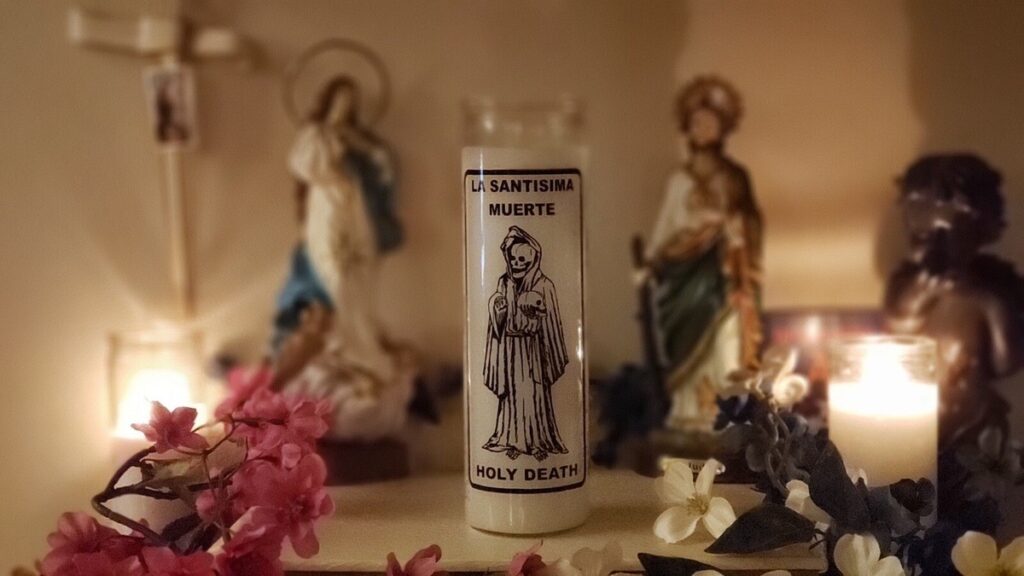
The most common representation is the White Santa Muerte. Dressed in white, she represents purity, protection, healing, and gratitude. Prayers to the White Robe often seek cleansing from negative energy, spiritual shielding,g or giving thanks for blessings received. The Red Santa Muerte embodies matters of passion, love, and sexuality. A Santa Muerte prayer to the Red Robe might be for attracting a romantic partner, reigniting passion in a relationship, or working with the raw energy of the heart. In contrast, the Black Santa Muerte is one of the most potent and misunderstood. She is linked to powerful protection, vengeance, and the absorption of negative energies. Prayers here are often for justice, returning harm to enemies, or creating an impenetrable shield of safety.
Other significant colors include the Gold or Yellow Santa Muerte, who governs prosperity, abundance, and financial success. The Green Santa Muerte is the patron of legal matters, justice in court, and opening blocked paths. The Blue Santa Muerte, often adorned in shades of cobalt or aqua, is associated with wisdom, learning, and enhanced communication. The Purple or Violet Santa Muerte connects to the realm of spirituality, mysticism, and contact with other spiritual dimensions. Finally, the Multicolored or Rainbow Santa Muerte combines all these attributes, offering a generalized approach for those who seek her aid in multiple areas of life simultaneously. Choosing the right color focus is the first step in crafting an effective Santa Muerte prayer.
The Structure and Components of a Santa Muerte Prayer
While there is no single, universally mandated text, a traditional Santa Muerte prayer often follows a recognizable structure that mirrors Catholic petitionary prayers but with its own unique character and tone. It typically begins with an invocation, calling upon Santa Muerte by her various titles and names. This is an act of recognition and respect, establishing the connection between devotee and saint. Common titles include “Santísima Muerte” (Most Holy Death), “Niña Blanca” (White Girl), “Niña Bonita” (Pretty Girl), “La Flaquita” (The Skinny Lady), and “La Madrina” (The Godmother).
Following the invocation, the petitioner states their specific request. This is where the prayer becomes deeply personal. Unlike more abstract prayers, a Santa Muerte prayer is often blunt, direct, and detailed. People may ask for protection for a family member crossing the border, for justice against someone who wronged them, for healing from a disease, or for success in a risky business venture. The language is not flowery but earnest and heartfelt. After the petition, it is customary to include a promise or manda. This is a vow to perform a specific act in gratitude if the request is granted. This could involve lighting a candle for a certain number of days, offering a specific item like tequila, cigarettes, or apples, wearing her image, or even getting a tattoo in her honor. The prayer then closes with expressions of faith, love, and respect, often repeating phrases like “Amen” or “So shall it be.”
This structure creates a reciprocal relationship. The prayer to Santa Muerte is not a one-way demand; it is the opening of a dialogue that involves commitment from the devotee. The manda underscores the understanding that her aid is a sacred gift, not an entitlement. This transactional yet devotional nature is a hallmark of the practice, setting it apart from more passive forms of prayer. The devotee actively participates in the manifestation of their request through their promised actions, creating a powerful feedback loop of energy and intent.
How to Pray to Santa Muerte: Setting Up an Altar and Ritual Basics
Creating a sacred space is fundamental to offering a sincere Santa Muerte prayer. An altar, or altarcito, serves as the physical focal point for devotion, a place where the spiritual and material worlds meet. It doesn’t need to be elaborate; even a small shelf or table can become a powerful center for prayer. The most important element is a statue or image of Santa Muerte. Many devotees start with a white-robed figure as she is considered the most balanced and encompassing. Over time, they may add statues in other colors corresponding to specific needs.
The altar is typically adorned with offerings that please her. Common items include glasses of water (for purification and life), red apples (for love and knowledge), candles (especially in colors matching your petition), bottles of tequila or rum, cigarettes or cigars, coins, flowers (particularly marigolds, the traditional flower of the dead), bread, and sweets. Photos of loved ones in need of protection or justice may also be placed on the altar. When preparing to say a Santa Muerte prayer, the space should be clean, and the devotee should approach with a focused mind and respectful demeanor. Lighting a candle is a common way to begin, as the flame acts as a beacon and an offering of energy.
The ritual of prayer itself can vary. Some prefer to kneel, while others stand comfortably. The key is concentration and emotional authenticity. The prayer can be spoken aloud, whispered, or even recited silently from the heart. Many devotees pray daily to maintain their connection, not only when they have a specific request. This daily practice might involve a simple greeting, offering fresh water, and a short prayer of gratitude or general protection. For more serious petitions, the ritual might be more involved, spanning several days or weeks, with specific offerings made each day as part of the manda. The environment should be one of respect; the altar is not a decoration but a living, active portal for devotion. Consistency and genuine intent are far more important than perfect ritual formality when learning how to craft a meaningful prayer to Santa Muerte.
Common Santa Muerte Prayers for Protection and Safety
Among the most frequent petitions made to the Skinny Lady are those for protection. In a world perceived as dangerous and unpredictable, devotees seek her mantle of safety. A Santa Muerte prayer for protection is a powerful spiritual tool believed to create an invisible shield around the petitioner, their home, family, or belongings. This is often directed to the Black Santa Muerte, whose domain includes repelling dark forces, but the White Santa Muerte is also invoked for general spiritual cleansing and guardianship.
A typical protection prayer might invoke her as the “Most Holy Death, Lady of the Shadows” or “Powerful Mother of the Just,” asking her to surround the devotee with her sacred cloak so that no physical, spiritual, or emotional harm may penetrate. It is common to be very specific: asking for protection during a journey, for a child in a rough neighborhood, for a home from burglary, or for personal safety in a conflict. The language is often vivid, asking her scythe to cut away envy and her globe to reveal hidden dangers. Devotees might anoint a candle with protective oils, inscribe their name on it, and let it burn as they recite their Santa Muerte prayer for several nights.
These prayers stem from a profound trust in her power as the ultimate authority over life’s end. The logic is simple: if she controls the passage of death, she can certainly withhold it or deflect the actions that could lead to it. For many living on the margins of society, where institutional protection is absent or corrupt, this spiritual safeguard provides immense psychological comfort and a sense of agency. The prayer for protection is not a passive wish; it is an active enlistment of a formidable ally, a declaration that the devotee and their loved ones operate under her sacred watch.
Love and Reconciliation Prayers to Santa Muerte
The realm of human emotion is another area where Santa Muerte’s influence is fervently sought. The Santa Muerte prayer for love is a potent appeal to her red-robed aspect, tapping into the raw, transformative energy of passion, attraction, and emotional connection. These prayers can range from requests to attract a new, faithful partner to pleas for reigniting the flame in a stagnant marriage or reconciling with an estranged loved one. It’s important to note that ethical considerations are often debated within the devotion; many practitioners emphasize that love prayers should not be coercive or designed to enslave another’s free will, but rather to open paths and hearts naturally.
A love prayer might describe the desired qualities in a partner or ask Santa Muerte to remove obstacles standing between the devotee and their beloved. Offerings for love prayers often include red candles, heart-shaped candies, roses, honey (to sweeten dispositions), and a pair of objects tied together with red string. The prayer to Santa Muerte might ask her to “soften the heart” of a specific person or to “bring a true and loyal love into my life.” The emotional vulnerability in these prayers is palpable, as devotees lay bare their deepest desires for companionship and intimacy before a non-judgmental figure.
Similarly, prayers for reconciliation often seek to heal rifts within families or between partners. They may ask Santa Muerte to clear misunderstandings, inspire forgiveness, and rebuild bridges that have been burned. These petitions recognize her power over all endings and, by extension, her potential power to end conflicts and cold wars of the heart. Whether seeking new love or mending old bonds, the Santa Muerte prayer in this context acts as a focused beam of intention, aimed at thawing frozen emotions and guiding human hearts toward connection, always with the understanding that the ultimate outcome must align with her merciful wisdom.
Prayers for Justice, Legal Matters, and Overcoming Enemies
For those who feel wronged, oppressed, or trapped in an unjust situation, Santa Muerte is seen as a potent arbiter of justice. This facet of her devotion is complex and often controversial, as it brushes against themes of retribution and spiritual warfare. A Santa Muerte prayer for justice is commonly directed to the Green Robe (for court matters) or the Black Robe (for more direct protection and consequence). Devotees turn to her when they believe the earthly legal system has failed them, when they face false accusations, or when they are victims of abuse, theft, or slander.
These prayers are direct and forceful. A petitioner might name the person who has harmed them and explicitly ask Santa Muerte to ensure that justice is served—that the truth be revealed, that the liar’s tongue be stilled, or that the thief face consequence. The famous “Seven Knots Prayer” is often used in this context, where a petitioner ties seven knots in a cord while reciting a prayer to Santa Muerte, each knot representing a specific binding or restriction placed upon an enemy’s harmful actions. The core sentiment is not necessarily vengeance for its own sake, but a desperate cry for balance and moral equilibrium from a power greater than any corrupt judge or violent individual.
It is in this arena that the Santa Muerte prayer demonstrates its role as a tool for the powerless. For the immigrant facing deportation, the tenant fighting a greedy landlord, or the victim of a crime that the police ignore, this prayer is an act of asserting dignity and demanding accountability in a spiritual court where the playing field is level. The accompanying rituals are intense, often involving mirror spells to reflect negativity or binding rituals to immobilize a threat. The underlying philosophy is that Santa Muerte, as the ultimate end of all things, can justly end a situation of persecution or injustice, restoring a sense of order and safety to the devotee’s life.
The Role of Candles, Offerings, and Promises in Prayer
The physical components of devotion are inseparable from the verbal Santa Muerte prayer. They constitute the language of action, demonstrating commitment and fueling the spiritual request. Candles are the most ubiquitous tool. The color, shape, and dressing of the candle align with the prayer’s intention. A red glass-encased candle (veladora) might be used for a love prayer, a green one for legal issues, a black one for protection. Devotees often inscribe their name, their petition, or their target’s name on the candle with a knife or pin. As the candle burns, it is believed to release the energy of the prayer into the universe, with the flame representing the living presence of the devotion.
Offerings, or ofrendas, are gifts to Santa Muerte to gain her favor and sustain the relationship. They are typically items she is believed to enjoy. Water is essential, representing life and purity; it is changed regularly. Alcohol, such as tequila or rum, symbolizes celebration and spirit. Apples offer sweetness and knowledge. Cigarettes or cigars represent the element of air and the transitory nature of smoke, akin to life itself. Coins and bills seek to reciprocate with financial flow. Fresh flowers, especially marigolds, honor her connection to the dead. The act of giving these offerings is a tangible expression of the bond, a way of saying “I care for you as I ask you to care for me.”
The manda, or promise, is the critical reciprocal element of the prayer to Santa Muerte. It is a vow made during the prayer, stating what the devotee will do if their request is granted. This creates a sacred contract. Amanda could go on a pilgrimage to a specific shrine, to offer a gold medal to her statue, to feed the homeless in her name, or to publicly testify about her miracle. Failure to fulfill a mandate is considered a grave breach of trust and can lead to spiritual backlash, as it is seen as taking her aid for granted. Thus, the Santa Muerte prayer cycle—petition, offering, promise, gratitude—forms a complete ecosystem of exchange, rooted in respect, responsibility, and tangible action.
Misconceptions, Dangers, and Ethical Considerations
The practice of praying to Santa Muerte is shrouded in sensationalism and misunderstanding. Mainstream media often conflates her veneration solely with narcoculture and criminality, portraying the Santa Muerte prayer as a dark ritual for evil ends. While it is true her followers include people in dangerous trades, the vast majority are ordinary individuals seeking help with universal human struggles: health, love, money, and safety. The first major misconception is that she is “evil” or demonic. From the devotees’ perspective, she is a holy, albeit non-canonical, figure of comfort and power—a reflection of death as a natural, sacred part of life, not a force of malice.
However, practitioners themselves often warn of “dangers,” not from Santa Muerte herself, but from approaching her with the wrong mindset. The primary danger is disrespect. Treating her like a magical vending machine, making demands without building a relationship, or failing to keep promises (mandas) is believed to invite negative consequences. She is seen as a stern but fair mother; she may teach hard lessons to those who are flippant or dishonest. Another consideration is the ethical weight of certain petitions, particularly those involving justice or love. Many teachers within the tradition advise against prayers that seek to directly harm others or override free will, suggesting instead to ask for protection and for justice to be served by her wisdom.
Furthermore, the syncretic and folk nature of the tradition means there is no central authority. This leads to varied practices and interpretations. A newcomer seeking to offer a prayer to Santa Muerte must navigate this landscape carefully, focusing on reverence, consistency, and positive intent. The ethics are ultimately personal but guided by a foundational principle: Santa Muerte sees the truth in your heart. Approaching her with manipulation, ego, or harmful intent is believed to ultimately backfire, as she embodies the impartial and inescapable reality of consequence. The relationship is built on authentic need and mutual respect, not on Hollywood stereotypes of dark pacts.
Building a Personal Relationship with Santa Muerte
Beyond specific petitions, the core of the devotion is cultivating a sincere, daily relationship with La Santísima. This transforms the practice from occasional crisis management to a sustained spiritual path. A daily Santa Muerte prayer doesn’t have to be long or elaborate; it can be a simple greeting in the morning, offering fresh water, lighting a candle, and sharing one’s thoughts, hopes, and fears for the day. This regular communication builds intimacy and trust, much like checking in with a beloved family member. It acknowledges her constant presence in one’s life, not just as a problem-solver but as a companion on the journey.
This relationship is deeply personal. Some relate to her as a stern yet loving mother (Madre), others as a protective godmother (Madrina), and still others as a powerful queen (Reina). Devotees often talk to her throughout the day, thanking her for small blessings or asking for guidance in moments of stress. They might carry her image on a medal, keeping her close. Celebrating her feast days, particularly the major one on November 1st (aligning with Día de los Muertos), is a key part of this bond. On these days, altars are lavishly decorated, special foods are prepared, and community gatherings may occur.
Building this bond requires consistency, honesty, and gratitude. Even when things are going well, offering thanks is crucial. This ongoing dialogue ensures that when a major crisis arises and a powerful prayer to Santa Muerte is needed, the connection is already strong and alive. It moves the devotion from a purely transactional model to one of genuine friendship and familial love. In this way, Santa Muerte becomes integrated into the fabric of the devotee’s daily existence, a sacred witness to both struggles and triumphs, a constant reminder of life’s fragility and the power of faith that faces it without flinching.
Comparison of Santa Muerte Prayer to Other Saint Veneration
| Core Entity | A personification of death itself, a folk saint. | Canonized human beings who led holy lives. |
| Judgment | Explicitly non-judgmental; accepts all devotees regardless of past. | Saints are models of virtue; intercession assumes repentance. |
| Prayer Style | Often direct, blunt, transactional, with specific promises (mandas). | Often formal, petitionary or intercessory, focused on grace. |
| Relationship Dynamic | Emphasizes reciprocal exchange, mutual obligation, and contract. | Emphasizes grace, intercession, and saint as role model. |
| Iconography | Skeletal figure with robes, scythe, globe; colors denote purpose. | Human figures with halos, often holding symbols of martyrdom or virtue. |
| Institutional Status | Not recognized (and often condemned) by the Catholic Church; folk tradition. | Officially recognized and promoted by the Catholic Church. |
| Primary Appeal | To the marginalized, those in danger, those seeking immediate, powerful aid. | To the general faithful seeking guidance, inspiration, and holy intercession. |
The Power of Faith and Testimonials
The undeniable force behind the spread of Santa Muerte devotion is the countless testimonials from devotees who believe their Santa Muerte prayer has been answered. These stories, shared in person, in botanicas, and across online forums, form the living scripture of the tradition. They speak of miraculous protection from violent situations, of sudden legal victories in hopeless cases, of reconciling with estranged family, or of finding love against all odds. A shopkeeper might tell of how a prayer to the Red Santa Muerte led to meeting their spouse; an immigrant might credit the Black Santa Muerte for their safe passage across a desert.
These narratives are powerful because they come from real people facing tangible hardships. They are not tales of abstract spiritual bliss, but of concrete intervention in messy, difficult lives. The testimonials often include descriptions of the exact prayer to Santa Muerte used, the offerings made, and the fulfillment of the manda. This creates a replicable roadmap for others in similar distress. The faith generated is raw and experiential, built on perceived results rather than doctrinal authority.
As one devotee famously stated, “She doesn’t ask if you are worthy. She only asks if you are in need.” This quote encapsulates the foundational appeal. Another common saying is, “I fear God, but I trust in Death.” This reflects the nuanced theology: respect for the ultimate divine, but a practical, trusting relationship with the holy personification of life’s only certainty. These testimonials and sayings reinforce the perception of Santa Muerte as an accessible, effective, and responsive spiritual force, making the act of offering a Santa Muerte prayer a beacon of hope for those who feel abandoned by other systems of faith and power.
Conclusion
The journey into the world of Santa Muerte prayer reveals a rich, complex, and deeply human spiritual practice. It is far more than a collection of occult rituals; it is a vibrant faith born from the margins, speaking a language of raw need, unconditional acceptance, and powerful reciprocity. To utter a prayer to Santa Muerte is to engage in a centuries-old dialogue with the sacred aspect of mortality itself, seeking not to escape life’s struggles but to navigate them with a formidable ally at one’s side. From the protective mantle of the Black Robe to the passionate heart of the Red, each colored candle lit and each heartfelt petition offered weaves the devotee into a tradition that honors death to fully embrace life. This practice demands respect, ethical consideration, and a commitment to reciprocal promises. It offers no easy answers but provides a profound sense of agency, comfort, and connection for millions. Whether one approaches it as a curious observer or a potential devotee, understanding the Santa Muerte prayer is to understand a powerful testament to the human spirit’s resilience and its endless search for justice, love, and protection in an uncertain world.
Frequently Asked Questions
What is the most powerful Santa Muerte prayer?
There isn’t a single “most powerful” prayer, as potency is believed to come from the devotee’s sincerity, faith, and the strength of their relationship with Santa Muerte, not the words alone. However, prayers that are personally composed from the heart, that clearly state the need, and that include a sincere promise (manda) are considered exceptionally powerful. The classic “Seven Powers Prayer” that invokes her by various titles and colors is also widely used for its comprehensive approach. The key to a powerful Santa Muerte prayer is authentic emotion and unwavering respect.
Can anyone pray to Santa Muerte, or are there restrictions?
Santa Muerte is famously open to all. She does not discriminate based on religion, background, morality, or social status. This is a cornerstone of her appeal. Anyone can pray to her. However, the “restriction” is not on who can, but on how they should. It is strongly advised that those who approach do so with genuine respect and a willingness to uphold their end of the devotional relationship. Casual or disrespectful experimentation is widely warned against by practitioners.
How often should I say a Santa Muerte prayer?
Frequency depends on your commitment. For a serious petitioner, daily prayer is ideal to build and maintain the relationship. This can be a short morning greeting and offering of fresh water. For specific petitions, you might recite a dedicated prayer to Santa Muerte consistently over a set period, like 7, 9, or 40 days, often while a candle burns. The most important thing is consistency and sincerity; a daily simple prayer is better than an elaborate one offered only in desperate times and then forgotten.
What happens if I don’t fulfill my promise (manda) to Santa Muerte?
Failing to fulfill a promised mandate is considered a serious breach of trust and a grave disrespect. In the devotional worldview, this can lead to negative consequences. Believers hold that blessings received may be reversed, or one might experience a streak of bad luck, obstacles, or hardships as a form of correction. It is seen as a spiritual debt that must be paid. It is far better to make a small, manageable promise and keep it faithfully than to make a grand vow you cannot fulfill.
Is praying to Santa Muerte considered witchcraft or evil?
No, not by her devotees. They view it as a legitimate, holy folk Catholic devotion. The association with witchcraft or evil is a common misconception stemming from her skeletal imagery and her popularity among people in marginalized or dangerous professions. The Santa Muerte prayer itself is a petitionary prayer, similar in structure to prayers to canonical saints. While some practitioners may incorporate folk magic (brujería) into their rituals, the core devotion is one of faith and relationship, not inherently “witchcraft.” The Catholic Church condemns it as deviant, but for followers, it is a sincere and effective spiritual path.