

Imagine a Dolphin Radar navigating murky waters at dusk, emitting a rapid burst of clicks, and within milliseconds knowing exactly where a school of fish is hiding, how thick the fish’s swim bladder is, and whether it’s worth chasing. Now imagine if our radar and sonar systems could do the same. For decades, engineers have looked at the bottlenose dolphin and wondered: How do they do it with such mediocre hardware?
The term “dolphin radar” is not merely a catchy phrase. It represents a genuine paradigm shift in how we think about detection systems—moving away from brute-force broadcasting and toward intelligent, adaptive sensing. While dolphins themselves use sound (biosonar), not radio waves, the principles behind their echolocation are so sophisticated that they are now being applied to both sonar and radar systems. In fact, because radar and sonar both solve the same fundamental wave equation (the Helmholtz equation) in different media, what works for a dolphin in water often works beautifully for radar in the air or on the surface of the sea.
This article dives deep into the world of dolphin radar. We will explore what it means, why it matters, and how a creature with “mediocre equipment” is teaching billion-dollar defense agencies how to build better sensors. From the shores of the Mediterranean, where X-band radar is being used to spot dolphin pods from cliffs, to the Mekong River, where AI-powered acoustic monitoring is saving the last 89 Irrawaddy dolphins, the influence of these marine mammals is expanding rapidly. We are not just studying dolphins anymore; we are learning to think like them.
What Exactly Is Dolphin Radar? Understanding the Biomimetic Bridge
When we say dolphin radar, we are actually referring to two distinct but interconnected concepts. The first is the use of radar technology to detect and track dolphins for conservation purposes. The second—and perhaps more revolutionary—is the use of dolphin-inspired processing techniques to make radar and sonar systems perform better in cluttered, noisy, or challenging environments.
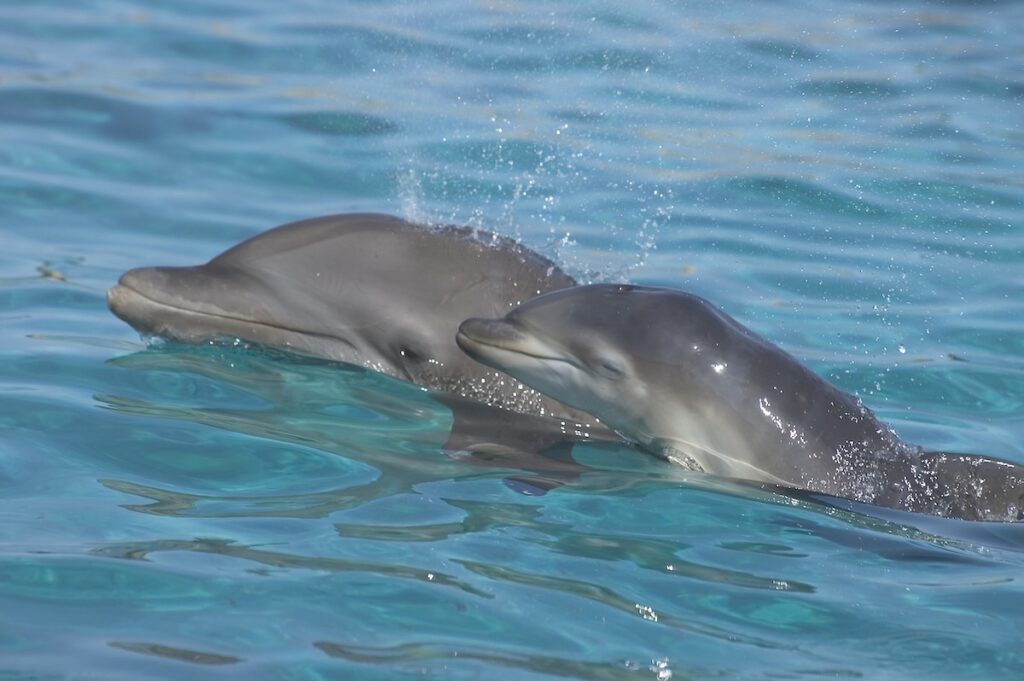
To understand why this matters, we need to step back and look at how dolphins actually echolocate. A dolphin does not simply shout and listen for an echo. It emits a train of clicks—sometimes varying the interval, sometimes varying the frequency, sometimes varying the amplitude. These clicks are not random; they are strategically deployed based on what the dolphin is trying to accomplish. If the dolphin is scanning a wide area for general obstacles, it might use broader beams. If it is锁定 onto a specific target, it narrows its focus. This is dynamic, real-time, adaptive beamforming, and it is something human engineers have only recently begun to master.
Now, apply that to radar. Traditional radar sweeps a beam and waits for reflections. It is powerful, but it is also inefficient and sometimes blind to subtle targets. Dolphin Radar-inspired radar mimics the marine mammal’s approach: using multi-ping perception, weighting strategies, and waveform diversity to pull weak signals out of overwhelming noise. This is not science fiction. In 2024, researchers published active sonar methods based on dolphin click trains that suppressed reverberation by 2 to 3 dB and successfully detected weak targets that conventional processing missed. The same mathematical principles are being translated directly into ultra-wideband radar systems.
Thus, dolphin radar is best understood as a bio-inspired design philosophy. It is the recognition that nature has already solved many of the problems we spend billions trying to fix, and that by observing a dolphin hunt, we can build a better coast guard radar, a better submarine detector, or a better marine mammal tracker.
The Science of Echolocation: Why Dolphin Radar Outperform Our Best Technology
It is almost embarrassing for the defense industry that a 200-kilogram mammal with a brain the size of a cantaloupe can outperform multi-million dollar sonar arrays. But it is true, and researchers have spent decades trying to understand why.
Dolphin Radar exhibit what scientists call “fine target discrimination.” They can tell the difference between a metal plate that is 0.23 millimeters thick and one that is 0.33 millimeters thick. They can identify the species of fish simply by listening to the echo, discerning the presence and condition of a swim bladder. Our best technological systems often require the target to be cooperative or the environment to be clean. Dolphins operate perfectly in harbors, estuaries, and surf zones—exactly the kinds of places modern naval operations occur.
One of the key insights from Dolphin Radar biosonar research is that dolphins pay attention to echoes that are 20 to 30 decibels below the maximum echo level. That is the equivalent of you trying to hear a whisper at a rock concert. Their auditory systems have an extraordinary dynamic range, and their neural processing is optimized not for loud signals, but for informative signals.
From a signal processing perspective, Dolphin Radar do not rely on a single ping. They use a multi-ping strategy. By comparing multiple echoes over time, they can cancel out stationary reverberation and highlight moving targets. This is the basis of the bio-inspired detection method tested in lake trials, where researchers applied both equal and unequal weighting strategies to echo trains, modeling their envelopes after real dolphin click trains https://ouci.dntb.gov.ua/en/works/7WAM3nPl/. The result was a system that could perceive relative motion status and suppress clutter far more effectively than traditional matched filters.
This is the essence of dolphin radar. It is not about copying the dolphin; it is about understanding the optimization principles that evolution has refined over 50 million years and translating them into algorithms that run on silicon.
X-Band Radar and Cetacean Detection: Seeing Dolphin Radar from the Shore
While engineers are busy stealing ideas from Dolphin Radar to improve radar, conservationists are using radar to save dolphins. In 2018, a team of researchers in Italy conducted the first-ever study in the Mediterranean Sea using ground-based X-band radar to detect and track bottlenose dolphins https://iris.cnr.it/handle/20.500.14243/367784.
The experiment was deceptively simple. From a panoramic terrace in Corniglia, they pointed a commercial marine radar at the sea and waited. Over 30 days and 300 hours of observation, they collected approximately 10,000 radar images. They visually sighted 70 dolphins and successfully identified 12 of them on radar imagery.
Now, twelve out of seventy does not sound like perfect accuracy, and the researchers were candid about the limitations. Wave heights above 0.8 meters rendered the system ineffective, and reliable detection faded beyond 2.5 nautical miles https://iris.cnr.it/handle/20.500.14243/367784. But here is why this matters: radar works at night. Dolphin Radar works in fog. Radar works when humans cannot see. If we can teach radar to recognize the distinctive echo of a dolphin breaking the surface, we can automate the monitoring of marine protected areas without needing someone sitting on a cliff with binoculars.
This is dolphin radar in its most literal sense—radar that sees dolphins. The implications are profound. Shipping lanes, offshore wind farm construction, and naval exercises all pose threats to marine mammals. If we can embed cetacean detection algorithms into standard navigation radar, we can slow boats down, reroute traffic, or halt pile driving when dolphins are present. The Italian study was a proof of concept, and it has already inspired similar efforts in Asia and North America.
The researchers noted that the next step is to allow the radar to identify the presence of marine mammals autonomously https://iris.cnr.it/handle/20.500.14243/367784. This requires machine learning, feature extraction, and a deep understanding of how Dolphin Radar bodies reflect electromagnetic waves at X-band frequencies. It is not easy, but it is inevitable.
5G-A and the Digital Dolphin Radar Sanctuary: China’s Technological Leap
Perhaps the most ambitious implementation of Dolphin Radar-related detection technology to date comes from China, where in October 2024, Fujian Mobile partnered with Xiamen Polytechnic University and the Xiamen Chinese White Dolphin Nature Reserve to launch the nation’s first 5G-A integrated sensing and communication platform for marine conservation https://www.cnii.com.cn/gxxww/rmydb/202410/t20241014_606752.html.
Let us break down what that means.
5G-A (5G-Advanced) is the next evolutionary step in cellular networks. It supports something called “integrated sensing and communication,” which means the same radio waves that carry your TikTok videos can also be used to detect moving objects—like ships, debris, or Dolphin Radar. In Xiamen, engineers deployed 5G-A base stations alongside traditional radar, visual cameras, and Automatic Identification System (AIS) receivers. They fused all this data into a single感知网络 that covers the entire保护区, expanding the effective monitoring area from 120 square kilometers to over 330 square kilometers https://www.cnii.com.cn/gxxww/rmydb/202410/t20241014_606752.html.
The system achieves a comprehensive sensing accuracy of 90%, with an angular precision error of less than 1.5 degrees and a漏检率 (miss rate) below 5%. It can track vessel speeds, predict trajectories, and detect anomalous behavior in real time. Crucially, it is designed to protect the endangered Chinese white dolphin.
This is dolphin radar at scale. It is not a single piece of hardware; it is a multi-source data fusion platform that treats dolphin detection as a big data problem. The team developed an AI large model trained on 100,000 vessel trajectory records and a knowledge base of 50,000 marine conservation documents. The model achieves 90% accuracy on first-query responses https://www.cnii.com.cn/gxxww/rmydb/202410/t20241014_606752.html.
What makes this project groundbreaking is the synchronization. Radar data, 5G-A感知 data, and optical imagery all operate on different clocks and coordinate systems. The team implemented NTP and PTP synchronization mechanisms to align timestamps across sources, then applied coordinate transformations and feature extraction algorithms to fuse them https://www.cnii.com.cn/gxxww/rmydb/202410/t20241014_606752.html. The result is a living digital fence—an electronic barrier that alerts authorities when ships enter sensitive habitats or when dolphins approach dangerous areas.
This is the future of marine conservation. Not chasing poachers with patrol boats, but knowing exactly where every vessel and every dolphin is, all the time, in real time.
From the Mekong to the Yangtze: Passive Acoustic Monitoring and Dolphin Sonar Signatures
While radar uses radio waves, dolphins use sound. And sometimes, the best way to detect a dolphin is to listen for its own sonar clicks rather than trying to illuminate it with external energy. This is the domain of passive acoustic monitoring, and it is saving species on the brink of extinction.
In Cambodia, the Irrawaddy dolphin population of the Mekong River has dwindled to an estimated 89 individuals https://www.khmertimeskh.com/501765334/researchers-join-hands-to-protect-cambodian-dolphins/. These dolphins are culturally significant, ecologically vital, and critically endangered. They are also incredibly difficult to spot in the brown, sediment-laden waters of the Mekong. Visual surveys are expensive, labor-intensive, and often miss animals that are submerged.
Enter the Chinese Academy of Sciences’ Institute of Hydrobiology. Researchers there had previously developed a real-time passive acoustic monitoring system for the Yangtze finless porpoise. Because both species are small-toothed whales that rely heavily on echolocation, the technology was directly transferable https://www.khmertimeskh.com/501765334/researchers-join-hands-to-protect-cambodian-dolphins/.
Since December 2023, acoustic sensors have been deployed along the Mekong, listening 24 hours a day for the distinctive sonar clicks of Irrawaddy dolphins. Artificial intelligence algorithms automatically identify dolphin signals, filter out boat noise and river turbulence, and map the animals’ movements and behaviors.
The results have been eye-opening. Researchers discovered 14 dolphins in a river section previously thought to have little dolphin activity. They learned that dolphins primarily hunt during the day and that the presence of tourist boats causes them to suspend feeding. They documented upstream migrations of 20 kilometers during the rainy season to reach deep-water refuges https://www.khmertimeskh.com/501765334/researchers-join-hands-to-protect-cambodian-dolphins/.
This is not dolphin radar in the electromagnetic sense, but it is absolutely dolphin radar in the conceptual sense. It uses the dolphin’s own biological radar against itself—not to harm, but to protect. By understanding where and when dolphins echolocate, authorities can establish no-fishing zones, limit tourist vessels, and reduce underwater noise pollution. The Cambodian government has already endorsed these measures, and drone-based visual monitoring is scheduled for deployment https://www.khmertimeskh.com/501765334/researchers-join-hands-to-protect-cambodian-dolphins/.
The lesson here is profound. Sometimes the best sensor is the one the animal already carries. We just need to build the listening infrastructure.
The Biomimetic Process: How to Steal from Nature Without Breaking It
Developing a true dolphin radar system is not as simple as recording a dolphin click and playing it through a speaker. According to researchers like Marc Olivieri, who presented at the University of Maryland’s 2007 FFT workshop, the biomimetic process requires more than superficial mimicry https://blog.umd.edu/nwc/fft2007/fft-2007-abstract-olivieri/.
Olivieri argues that we must understand the evolutionary optimization behind dolphin biosonar. Why did dolphins settle on particular click waveforms? Why do they vary inter-click intervals? How do they balance near-range resolution against side-lobe suppression? These are engineering trade-offs, and dolphins have found solutions that are both elegant and robust.
One of the key takeaways is that dolphin waveforms are not designed for maximum energy; they are designed for maximum information https://blog.umd.edu/nwc/fft2007/fft-2007-abstract-olivieri/. In cluttered environments, a short, broadband pulse provides better range resolution than a long, continuous wave. But short pulses have lower total energy, which reduces detection range. Dolphins navigate this trade-off by adapting their signals in real time.
Modern ultra-wideband radar faces the same problem. By borrowing dolphin-inspired waveform design, engineers can achieve high resolution without sacrificing too much sensitivity. The mathematical framework that describes dolphin echolocation is now being encoded into field-programmable gate arrays and digital signal processors aboard naval vessels and coast guard aircraft https://cat.fsl-bsf.scitech.gc.ca/search~S1?/tBroadband+services%2C+systems+%26+networks./tbroadband+services+systems+and+networks/-3%2C-1%2C0%2CB/frameset&FF=tbroadband+ultra+wideband+sensor+system+for+active+and+passive+detection+and+classification+of+targets&1%2C1%2Chttps://blog.umd.edu/nwc/fft2007/fft-2007-abstract-olivieri/.
Furthermore, the biomimetic approach extends beyond waveforms to system architecture. Dolphins do not have separate “transmit” and “receive” beamformers; their skull and jaw structures create a dynamically adjustable aperture. Researchers are now exploring conformal arrays and cognitive sensing architectures that mimic this physical adaptability https://digital-library.theiet.org/content/books/ra/sbra514e?fmt=downloadhttps://openlibrary.telkomuniversity.ac.id/pustaka/187416/biologically-inspired-radar-and-sonar-lessons-from-nature.html.
Why Dolphin Radar Matters for National Security and Climate Resilience
It is easy to frame dolphin radar as a conservation story, and it is. But it is also a national security story. The same clutter-filled, reverberation-dominated environments that confuse dolphin predators also confuse naval sonar operators hunting submarines. The same signal processing techniques that pull a dolphin click out of snapping shrimp noise can pull a quiet diesel-electric submarine out of coastal reverberation.
The U.S. Office of Naval Research has sponsored biosonar research for decades. The U.S. Navy maintains marine mammal programs not just for show, but because dolphins are evidence that certain detection problems are solvable https://blog.umd.edu/nwc/fft2007/fft-2007-abstract-olivieri/. When a dolphin can find a 2-inch metal sphere in turbid water at football-field distances, it is telling us that physics permits that level of performance. We just have to figure out the algorithm.
Moreover, climate change is opening Arctic shipping lanes and increasing offshore energy development. These activities put pressure on marine ecosystems and increase the risk of ship-strike mortality for large whales and dolphins. Automated detection systems based on dolphin radar principles—whether acoustic, electromagnetic, or optical—will be essential for mitigating human impacts in an increasingly busy ocean.
The integration of 5G-A sensing, AI fusion, and bio-inspired processing is not just a technological upgrade. It is a reconceptualization of how we relate to the ocean. Instead of viewing the sea as an opaque barrier, we are learning to see it as a medium rich with signals, echoes, and information—if only we know how to listen.
Challenges and Limitations: The Road Ahead for Dolphin Radar
For all its promise, dolphin radar is not a magic bullet. The Italian X-band study explicitly noted that sea state is a critical limiting factor. Waves higher than 0.8 meters create surface clutter that masks the small, intermittent echo of a dolphin body https://iris.cnr.it/handle/20.500.14243/367784. While radar can detect ships through much higher seas, a dolphin presents a much smaller radar cross-section, and its surfacing behavior is unpredictable.
Similarly, passive acoustic monitoring is constrained by ambient noise. The Mekong River study highlighted that tourist boats and fishing vessels produce significant acoustic interference, forcing dolphins to adjust their echolocation patterns or cease foraging altogether https://www.khmertimeskh.com/501765334/researchers-join-hands-to-protect-cambodian-dolphins/. An AI model trained on clean recordings may struggle in noisy environments, and continuous model retraining is required.
There are also fundamental physical limits. Radar cannot penetrate seawater, so it can only detect dolphins when they are at or near the surface. Sonar can penetrate water, but active sonar risks disturbing the very animals we are trying to protect. Passive acoustics require the animal to vocalize, and not all dolphins click continuously.
Thus, the future of dolphin radar lies in sensor fusion. No single modality provides a complete picture. Radar offers wide-area surface surveillance. Passive acoustics offers underwater detection. Optical cameras offer species confirmation. AI offers the ability to combine these disparate data streams into a coherent operational picture https://www.cnii.com.cn/gxxww/rmydb/202410/t20241014_606752.html.
The福建移动 project is the template. It is not about building the perfect dolphin detector. It is about building a system where the whole is greater than the sum of its parts.
Comparison Table: Dolphin Radar Technologies in Practice
| X-Band Marine Radar | Electromagnetic (9 GHz) | Surface detection of dolphins | Works at night, in fog, over wide areas | Degraded by waves >0.8 m; short detection range (~2.5 nm) | Mediterranean study, 2018 https://iris.cnr.it/handle/20.500.14243/367784 |
| 5G-A Integrated Sensing | Cellular RF | Real-time vessel/dolphin tracking, electronic fencing | Fuses radar, AIS, camera; AI-driven; 20km verification range | Requires dense base station infrastructure | Xiamen White Dolphin Reserve, 2024 https://www.cnii.com.cn/gxxww/rmydb/202410/t20241014_606752.html |
| Bio-Inspired Active Sonar | Acoustic (underwater) | Weak target detection in reverberant water | Suppresses clutter by 2-3 dB; mimics dolphin click trains | Still experimental; limited field trials | Lake trial, 2024 https://ouci.dntb.gov.ua/en/works/7WAM3nPl/ |
| Passive Acoustic Monitoring | Acoustic (underwater) | Species identification, behavior mapping, population census | Non-invasive; 24/7 operation; detects vocalizations | Requires dolphins to click; affected by boat noise | Mekong River Irrawaddy dolphin project https://www.khmertimeskh.com/501765334/researchers-join-hands-to-protect-cambodian-dolphins/ |
| Ultra-Wideband Bio-Radar | Electromagnetic (UWB) | Ground/air target detection in clutter | Based on dolphin/bat waveform principles | Conceptual development stage | ONR/SPAWAR research https://cat.fsl-bsf.scitech.gc.ca/search~S1?/tBroadband+services%2C+systems+%26+networks./tbroadband+services+systems+and+networks/-3%2C-1%2C0%2CB/frameset&FF=tbroadband+ultra+wideband+sensor+system+for+active+and+passive+detection+and+classification+of+targets&1%2C1%2Chttps://blog.umd.edu/nwc/fft2007/fft-2007-abstract-olivieri/ |
Quotes from the Front Lines of Dolphin Radar Research
“Dolphins have been found to have an excellent sonar system that can detect and recognise targets in noisy and highly reverberant environments. However, their ‘equipment’ has only mediocre characteristics from a technological sonar perspective.”
— Qingcui Wang et al., Journal of Physics: Conference Series, 2024 https://ouci.dntb.gov.ua/en/works/7WAM3nPl/https://www.infona.pl/resource/bwmeta1.element.ieee-art-000006232409
“The application of X-band radar to the detection of cetaceans is a new and innovative field of research that could improve the automation of marine mammal data collection, and this is the first time in the Mediterranean Sea.”
— Mingozzi, Salvioli & Serafino, CNR IRIS, 2020 https://iris.cnr.it/handle/20.500.14243/367784
“It is conceivable that an Ultra-Wideband Radar System of the same detection technique can also be developed.”
— *Gee-In Goo, Broadband Bionic Sonar System final report, 2000* https://cat.fsl-bsf.scitech.gc.ca/search~S1?/tBroadband+services%2C+systems+%26+networks./tbroadband+services+systems+and+networks/-3%2C-1%2C0%2CB/frameset&FF=tbroadband+ultra+wideband+sensor+system+for+active+and+passive+detection+and+classification+of+targets&1%2C1%2C
“The system will enable authorities to remotely monitor dolphin movements and river activities, particularly illegal fishing, through real-time video feeds from drones and remotely controlled cameras.”
— I’m Rachna, Undersecretary of State, Cambodia Ministry of Agriculture, 2024 https://www.khmertimeskh.com/501765334/researchers-join-hands-to-protect-cambodian-dolphins/
“A biomimetic process requires more than just mimicking the bio-based system… through a focused observation of the natural process, one can derive an understanding of the evolutionary optimization.”
— Marc Olivieri, University of Maryland, 2007 https://blog.umd.edu/nwc/fft2007/fft-2007-abstract-olivieri/
Frequently Asked Questions About Dolphin Radar
What is dolphin radar, and how does it work?
Dolphin radar is a term used to describe two related technologies. First, it refers to the use of radar systems to detect and track live dolphins for conservation and research purposes, as demonstrated in Mediterranean studies using X-band radar https://iris.cnr.it/handle/20.500.14243/367784. Second, and more broadly, it describes bio-inspired radar and sonar systems that mimic the echolocation strategies of dolphins—such as multi-ping perception, adaptive waveform design, and clutter rejection—to improve detection performance in challenging environments https://ouci.dntb.gov.ua/en/works/7WAM3nPl/https://cat.fsl-bsf.scitech.gc.ca/search~S1?/tBroadband+services%2C+systems+%26+networks./tbroadband+services+systems+and+networks/-3%2C-1%2C0%2CB/frameset&FF=tbroadband+ultra+wideband+sensor+system+for+active+and+passive+detection+and+classification+of+targets&1%2C1%2C. Unlike traditional radar, which relies on单一 pulses, dolphin radar emphasizes the intelligent processing of multiple echoes over time.
Can radar really detect dolphins underwater?
No. Electromagnetic radar waves cannot penetrate seawater to any significant depth. However, radar can detect dolphins when they surface to breathe. The dolphin’s body and the splash it creates produce a radar echo that, with appropriate signal processing, can be distinguished from waves and sea clutter. This is why X-band radar studies are conducted from coastal cliffs or offshore platforms, looking down at the sea surface https://iris.cnr.it/handle/20.500.14243/367784. For underwater detection, acoustic methods (sonar or passive listening) are required.
How is 5G related to dolphin radar?
5G-Advanced (5G-A) networks are capable of integrated sensing and communication. This means a 5G-A base station can both transmit data and function as a radar sensor. In Xiamen, China, engineers used 5G-A to detect vessels and dolphins across hundreds of square kilometers, fusing this data with traditional radar and AI analytics. This represents a major scalability breakthrough for dolphin radar, as cellular networks are far more ubiquitous than dedicated marine radar installations https://www.cnii.com.cn/gxxww/rmydb/202410/t20241014_606752.html.
Are dolphins harmed by radar or acoustic monitoring?
Passive acoustic monitoring does not transmit any energy; it only listens, so it poses no harm to dolphins. X-band marine radar used for detection operates at frequencies and power levels similar to standard navigation radar, which is generally considered safe at typical operational distances. Active bio-inspired sonar is still experimental, but researchers are careful to design waveforms that minimize potential disturbance. The conservation projects discussed in this article—Mediterranean, Xiamen, and Mekong—are explicitly focused on protecting dolphins from threats like ship strike, bycatch, and habitat disturbance https://iris.cnr.it/handle/20.500.14243/367784https://www.cnii.com.cn/gxxww/rmydb/202410/t20241014_606752.htmlhttps://www.khmertimeskh.com/501765334/researchers-join-hands-to-protect-cambodian-dolphins/.
What is the difference between dolphin radar and dolphin sonar?
This distinction is critical. Dolphins themselves use sonar (sound navigation and ranging) because they operate underwater, where sound travels efficiently, and radio waves do not. Dolphin radar is a human technology that either (a) uses radio waves to detect dolphins, or (b) uses dolphin-inspired algorithms to improve radar performance. When engineers speak of a “dolphin-inspired radar,” they are applying mathematical principles derived from dolphin biosonar to electromagnetic wave problems. The underlying physics (wave equations, echo analysis, time-of-flight ranging) are similar, but the media and energy types differ https://cat.fsl-bsf.scitech.gc.ca/search~S1?/tBroadband+services%2C+systems+%26+networks./tbroadband+services+systems+and+networks/-3%2C-1%2C0%2CB/frameset&FF=tbroadband+ultra+wideband+sensor+system+for+active+and+passive+detection+and+classification+of+targets&1%2C1%2Chttps://www.snexplores.org/article/explainer-what-are-lidar-radar-and-sonar.
Why is dolphin echolocation so difficult to replicate?
Dolphin echolocation is not just about generating a click; it is about the entire闭环 process of transmission, reception, neural processing, and behavioral adaptation. Dolphins adjust their beam pattern, click rate, frequency content, and listening strategy based on immediate feedback from each echo. Replicating this cognitive, adaptive loop in a hardware system requires advanced signal processing, fast computing, and often machine learning. Furthermore, dolphin clicks are extremely broadband and short duration, which is technically challenging for synthetic transducers https://www.infona.pl/resource/bwmeta1.element.ieee-art-000006232409https://blog.umd.edu/nwc/fft2007/fft-2007-abstract-olivieri/.
Can dolphin radar be used for purposes other than dolphin conservation?
Absolutely. While this article highlights conservation applications, the underlying technology has significant defense and commercial applications. The U.S. Office of Naval Research and various defense contractors have invested heavily in bio-inspired sonar and radar for submarine detection, mine countermeasures, and littoral warfare. The ability to detect weak targets in heavy clutter is relevant to autonomous vehicles, border security, and even through-wall radar imaging. The dolphin is simply the best existing example of a mobile, adaptive, broadband sonar system https://ouci.dntb.gov.ua/en/works/7WAM3nPl/https://blog.umd.edu/nwc/fft2007/fft-2007-abstract-olivieri/https://digital-library.theiet.org/content/books/ra/sbra514e?fmt=download.
Conclusion: Listening to the Ocean’s Whisper
The story of dolphin radar is ultimately a story about humility. We have built satellites that can see galaxies billions of light-years away, yet we struggle to see a three-meter dolphin surfacing fifty meters from our bow. We have developed quantum clocks and gigawatt transmitters, yet we are outmatched by a mammal that never attended engineering school.
But humility is productive. It forces us to observe more closely, to question our assumptions, and to recognize that nature is not just a collection of resources to be exploited, but a library of patents waiting to be read.
From the 2024 lake trials in China that proved dolphin-inspired multi-ping processing can suppress reverberation by 3 decibels, to the cliffs of Cinque Terre where an X-band radar watched dolphins swim under the stars, to the muddy banks of the Mekong where microphones catch the last whispers of a dying population—we are finally learning to listen https://ouci.dntb.gov.ua/en/works/7WAM3nPl/https://iris.cnr.it/handle/20.500.14243/367784https://www.khmertimeskh.com/501765334/researchers-join-hands-to-protect-cambodian-dolphins/.
Dolphin radar is not a single machine. It is a philosophy. It says that the best way to detect an object is not always to shout louder, but to listen smarter. It says that evolution has already stress-tested its designs for millions of years, and we ignore those designs at our own expense. It says that conservation and national security are not opposing priorities, but convergent ones, because a sensor that can find a dolphin in rough seas can also find a submarine, and a network that protects a sanctuary can also protect a port.
We are still in the early innings. The Mediterranean study detected only 12 of 70 dolphins. The Mekong project is racing against extinction. The 5G-A platform in Xiamen is the first of its kind, not the thousandth. But the trajectory is clear. The next generation of radar will not just be harder, better, faster, stronger. It will be wiser. It will have learned from the dolphins.